USB-MIDI connectivity for stage pianos should be 1 port for most players, and 2 ports only if you need a separate computer link and hardware MIDI routing. If you only connect to one computer or tablet, 1 USB-MIDI port is enough; if you also need a second MIDI path, plan for 2 ports. Decide first whether your setup needs one data link or two.
Recommended USB-MIDI Ports by Use Case
| use case | recommended USB-MIDI connectivity | why this number |
|---|---|---|
| Simple software instrument use | 1 port | One USB-MIDI connection covers a single computer or tablet. |
| Practice with a laptop | 1 port | One port is enough when the stage piano only sends note data to one device. |
| Recording into a DAW | 1 port | One USB-MIDI port handles controller data for one recording computer. |
| Stage rig with a second MIDI path | 2 ports | Two ports help when you need one USB link and one separate MIDI route. |
| Computer plus external MIDI gear | 2 ports | Two ports reduce the need to repatch when the piano must talk to more than one destination. |
| Minimal live setup | 1 port | One port keeps the connection simple when the stage piano only controls one host. |
Products in this category with a full review here
Prices across these 3 run from $192.49 to $3999; each one has a full review here.
If you are looking for a specific feel, see our comparison of the best stage piano for jazz players.


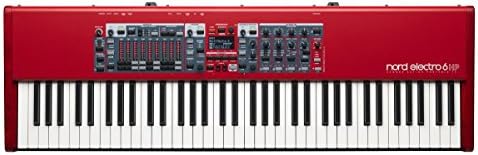
What happens if you go under on USB-MIDI ports?
Going under on USB-MIDI ports usually means one of two problems: you cannot connect every device you planned for, or you must add a hub or interface later. That adds another point of failure and another cable run.
One USB-MIDI port works for a single computer
Do you need the stage piano to drive only one computer? Then 1 port is enough. If your setup needs the piano to send data to a computer and a separate MIDI device, 1 port forces a compromise.
You might also want to consider the best stage piano for home practice depending on your goals.
One USB-MIDI port suits a single digital signal path
The risk is not sound quality. The risk is routing. A stage piano with 1 USB-MIDI port can still be a good fit, but only when your whole setup stays inside one digital path.
What happens if you overbuy USB-MIDI ports?
Overbuying USB-MIDI ports means paying for routing capacity you never use. If your work stays inside one computer, 2 ports adds little practical value.
It is also helpful to understand the correct key count for stage pianos.
That extra port can also tempt you into a more complex setup than you need. More ports do not improve note response, key feel, or the sound engine.
One port is simpler. Two ports are for routing, not quality.
Newcomers can learn more by viewing the various types of stage pianos, explained.
The mistake most buyers make with USB-MIDI ports
The mistake is treating USB-MIDI ports like a quality score. USB-MIDI connectivity only measures how many connection points the stage piano has for sending or receiving control data.
Match USB-MIDI ports to the stage piano signal path
What should you optimise instead? Match the port count to your actual signal path, then check whether you need MIDI DIN, audio outputs, or computer compatibility. A stage piano with 1 USB-MIDI port and the right other connections is often more useful than one with extra ports you never use.
For a deeper dive into the hardware, see our full review of the SP7 Grand.
USB-MIDI is the control link. It is not the whole rig.
How USB-MIDI ports interact with other stage piano limits
USB-MIDI ports matter less when another spec is the real ceiling. A stage piano with 1 port still needs the right key count, key action weight, and audio outputs for the job.
You can also see the full review of the CP1 for more details.
Key count shapes stage piano range before connectivity
Key count decides how much range you have for splits, left-hand comping, and piano parts. If you need full piano coverage, 88 keys matter more than extra USB-MIDI ports. If portability matters more, 61 keys or 73 keys may shape the choice before connectivity does.
Key action weight matters for pianists because unweighted action changes how dynamics and repetition feel. A model with 2 USB-MIDI ports does not fix an action that is wrong for piano parts.
To see how it performs, view our full review of the Piano 88.
Onboard speakers decide whether a stage piano works alone
Onboard speaker power changes whether the instrument can work without external amplification. If the stage piano has no onboard speakers, USB-MIDI ports do not make it self-contained. You still need a monitor, PA, or interface path for sound.
USB-MIDI ports do not replace the right MIDI connection
MIDI connectivity also matters in a broader sense. USB-MIDI is the computer link, while MIDI ports handle classic hardware control. If you need the stage piano to trigger older gear, a higher USB-MIDI port count does not replace the wrong physical connection type.
Finally, check out the full review of the CP300 for more specifications.
For most buyers, 1 USB-MIDI port is the practical threshold. Choose 2 only when your setup already needs two separate data routes.
Every stage piano guide in this category
Top Discounts is reader-supported: some links on this page are affiliate links, and as an Amazon Associate Top Discounts earns from qualifying purchases at no extra cost to you. Learn more.