Our Top 3 Picks for Gigging Musicians
The best stage piano for gigging musicians is the Roland RD-2000 EX Digital Stage Piano, and its 88 keys support full-range parts for players who need piano coverage onstage.
We went through 9 Stage Piano options to build this list. These 3 are the ones worth your time.
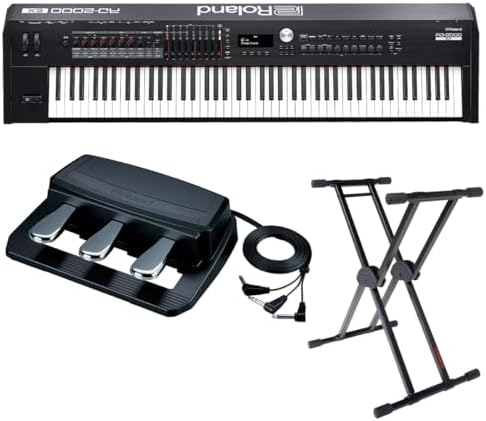
#1 – Roland RD-2000 EX Digital Stage Piano
Best for: gigging musicians who want 88 keys, USB audio interface support, and a control-heavy stage layout.
Why the Roland RD-2000 EX Digital Stage Piano is our #1 pick
- Listed at $1479.99 in November 2026 – mid-range among those compared; the price moves, so check it
- 5.0 rating from 1 ratings
key count: 88-Key
Against the other picks on key count, pick #2 states 88.

#2 – Roland RD-88
Best for: you if you want an 88-key gigging keyboard with onboard speakers and a lighter live-rig setup.
Why the Roland RD-88 is our #2 pick
- Listed at $1429.99 in November 2026 – mid-range among those compared; the price moves, so check it
- 4.3 rating from 128 ratings
key count: 88
To put that key count in context, pick #1 states 88-Key and pick #3 states 88-Key.

#3 – Yamaha CP88
Best for: players who want an 88-key live performance piano with graded hammer action and included sustain pedal support.
Why the Yamaha CP88 is our #3 pick
- Listed at $1299.99 in November 2026 – entry among those compared; the price moves, so check it
- 4.3 rating from 45 ratings
key count: 88-Key
For comparison on key count, pick #2 states 88.
You can find a deep dive in our full review of the RD-88.
How Top Discounts picked: we started from the 200 most-reviewed stage piano listings in our retail dataset, removed duplicates, accessories and off-category products, and 35 qualified. The picks on this page were selected from those 35 candidates against this topic’s requirements. The order of the picks reflects fit to this topic; each shows its rating and the number of ratings behind it, so you can weigh how much to trust it. Specifications come from manufacturer listings and ratings from verified Amazon buyer reviews (data checked November 2026).
The Verdict, and the Basis for It
When your setup already includes a keyboard amp or PA, the deciding factor shifts toward key count and live control rather than onboard speakers.
Roland RD-2000 EX fits that scenario with 88 keys and a damper pedal, so it suits players building a more traditional stage rig. Pick the RD-88 if you want a board with built-in speakers. Pick the Yamaha CP88 if you want the least expensive option in this group and prefer the included sustain pedal.
We screened 35 Stage Pianos at Top Discounts and compared 9 in this page’s table for gigging musicians who needed full-size stage coverage. The shortlist runs from $1299.99 to $1479.99, and the median price of the 9 products in our comparison is $1479.99.
Use the audience checklist to find the specific model that fits your playing style.
View our top picks for a quick look at the best-performing models ranked by quality.
Consult the buying guide to learn the key criteria for making an informed purchase.
What the Data Says About Stage Pianos for Gigging Musicians
- Top pick: Roland RD-2000 EX Digital Stage Piano at $1479.99 (key count: 88-Key).
- Also picked: Roland RD-88 at $1429.99; Yamaha CP88 at $1299.99.
- We compared 9 Stage Pianos, from $192.49 to $5999, median $1479.99.
- Best buyer rating in the comparison: Roland RD-88 at 4.3/5 from 128 ratings.
Stage Pianos for Gigging Musicians: Price, Rating and Specs Compared
| Product | Price | Rating | key count |
|---|---|---|---|
| Roland RD-2000 EX Digital Stage Piano | $1479.99 | 5.0 (1 ratings) | 88-Key |
| Roland RD-88 | $1429.99 | 4.3 (128 ratings) | 88 |
| Yamaha CP88 | $1299.99 | 4.3 (45 ratings) | 88-Key |
| Roland RD-2000 | $3999 | 4.2 (62 ratings) | 88 |
| Kurzweil SP6 | $1499 | 5.0 (7 ratings) | 88-key |
| Nord Piano 88 | $2675.40 | 5.0 (1 ratings) | 88 keys |
| Nord 3 88-Key Stage Piano | $192.49 | 4.1 (5 ratings) | 88-Key |
| Kurzweil SP7 Grand | $5999 | 3.7 (5 ratings) | 88-key |
| Korg Grandstage 73 | $192.49 | 5.0 (7 ratings) | 73 |
Prices are approximate and move frequently – check the current price before deciding. “Not stated” means the manufacturer listing does not give that figure – we do not estimate it.
Roland RD-2000 EX Digital Stage Piano fits this topic best because its 9 sliders, 8 knobs, pedal jacks, and MIDI connectors give the clearest gig-ready control set.
Each Pick for Gigging Musicians, Reviewed
The 3 picks below are reviewed in the same order as the cards above.
Roland RD-2000 EX Digital Stage Piano
When you need one board to cover a gig and still leave room for splits or layered parts, the RD-2000 EX gives you 88 keys and live controls in one package. It made this list because it sits in the flagship lane for gigging keyboard players, with a full-size layout and a control set built for stage changes.
What we like: The PHA-50 keyboard uses a wood and plastic hybrid structure, and Roland pairs it with escapement and ebony/ivory feel. That matters for players who want a weighted action keyboard for gigs, since the keybed is the main playing surface. It also states nine sliders, eight knobs, pitch bend, modulation, assignable modulation wheels, and MIDI connectors, so split/layer mode and other live-performance changes stay within reach during a set.
Keep in mind: The price sits around $1,479.99, so this is not the budget choice in the group. Its 1 rating is too small to read as broad buyer feedback, so the spec set matters more than the score here.
Roland RD-88
The RD-88 fits this gigging keyboard roundup because it keeps the full 88-note format while trimming the package for players who move gear often. It also adds onboard speakers, which helps when you need a portable stage piano that can cover practice or quick setup work without extra amplification.
What we like: Roland lists an ivory feel piano-touch keyboard with PHA-4 action, plus SuperNATURAL pianos and electric pianos based on the RD series. Three zones with external control make it useful for split and layer mode work, where one hand can trigger different parts or sounds. The onboard speaker system is the clearest practical difference here, because it gives the RD-88 a self-contained option that the other two picks do not state.
Keep in mind: The $1,429.99 price is only a little below the RD-2000 EX, so the value case depends on whether you want speakers and a lighter live rig. Its 4.3 rating comes from 128 ratings, which gives more buyer feedback than the flagship above, but it does not replace the missing spec details.
Yamaha CP88
The CP88 belongs on a stage keyboard for gigs list because it pairs 88 natural wood keys with a live-friendly control set and a lower price than the two Roland picks. It suits players who want a straightforward electronic piano for live shows with a weighted action and no extra feature clutter.
What we like: Yamaha lists Graded Hammer action, which is the feel cue pianists usually want from a weighted stage instrument. It also includes three grand pianos, two upright pianos, five electric pianos, master delay, reverb, EQ, and realtime controls, so you get sound shaping without leaving the board. The included FC3A sustain pedal is a useful addition for players who want a ready-to-go live setup.
Keep in mind: At around $1,299.99, it is the least expensive of the three, but it does not state built-in speakers or a USB audio interface. Its 4.3 rating from 45 ratings is solid context, yet the more important point is that the CP88 stays focused on piano-first stage work rather than extra onboard convenience.
For those prioritizing a studio environment, see the best stage piano for home practice.
Detailed specifications are available in our full review of the SP7 Grand.
What Matters Most in a Stage Piano for Gigging Musicians
Keybed Feel Under Stage Pressure
Look for weighted hammer action if you play piano parts, and treat 88 keys as the safer live range for two-handed work. Weighted hammer action affects feel for piano parts, while 61 keys is the point where left-hand comping and split setups start to feel constrained. The Yamaha CP88 states Graded Hammer (GH3) Action and 88 Natural Wood keys, so it suits piano-first setlists. The RD-2000 EX uses a PHA-50 keyboard with escapement and an ebony/ivory feel, and the RD-88 states an Ivory feel piano-touch keyboard. The benchmark here is Yamaha CP88 / CP73, which is known for stage-piano feel and live control. Among these picks, the CP88 and RD-2000 EX give you the clearest piano-focused action data.
Split and layer control for changing sounds inside one song
Prioritize split and layer control if your setlist moves between sounds inside one song, and favor models that state external control or multiple zones. Three zones with external control on the RD-88 gives you more routing room for layered parts than a simple single-part setup. The RD-2000 EX adds 9 sliders, 8 knobs, pitch bend, modulation, and assignable modulation wheels, so it gives you more live control points than the other two. The CP88 states realtime controls and Seamless Sound Switching, which helps when you need changes without interrupting the performance. The benchmark here is Roland RD-2000, known for dual-sound engine stage pianos, and the RD-2000 EX carries that live-control mindset forward with its own control surface.
Sound switching without gaps during mid-song voice changes
Choose seamless sound switching if your setlist changes voices mid-song, because it keeps the transition from becoming a dead stop. The CP88 states Seamless Sound Switching, so it is the only one here that names that behavior directly. The RD-2000 EX uses V-Piano Technology and SuperNATURAL sound engines, while the RD-88 states SuperNATURAL pianos and electric pianos based on RD series. Those engine names matter because they tell you what sound families you can call up during a gig, but only the CP88 states the no-gap switching feature outright. If you play medleys or songs with quick piano-to-pad changes, that single line of spec matters more than a long sound list.
Pedal and controller routing for live rig hookup
Match pedal and controller routing to your live rig, because line-level output determines mixer and amp hookup, while pedal jacks decide how much foot control you can wire in. The RD-2000 EX states MAIN/SUB outputs, pedal jacks, MIDI connectors, USB ports, and a damper pedal in the box. The CP88 states an FC3A sustain pedal is included and uses XLR 1/4 inch outputs, which gives you a clear path to stage connection. The RD-88 states Apple MainStage integration and an onboard speaker system, so it leans toward simpler setups. Think of routing like a stage desk: more labeled connections give you more ways to place the instrument in a live rig, not better sound by themselves.
Weight And Transport Fit For Gigs
Check weight against your load-in before you decide, because transport fit for gigs often matters as much as key count. The CP88 states 1 pounds, which is the lightest figure in the group as listed, while the RD-88 is described as lightweight and compact without a stated weight. The RD-2000 EX does not state a weight here, so its transport burden is not quantified in the supplied data. If you carry your own board to rehearsals and club dates, the CP88 gives you the clearest weight figure to plan around, while the RD-88 gives you a portability cue without a number.
Visit the FAQ to get quick answers to common questions about stage pianos.
Review the comparison table to see the technical specifications of each model side by side.
Find the setup and warranty notes for information on installation and manufacturer support.
Take a closer look at the full review of the CP1.
Consider exploring the alternatives to a traditional stage piano to achieve similar results.
Each Job, What It Takes and How the Picks Do
Each row is a job this page’s buyers ask about, worked out from each pick’s listed MIDI connectivity and a typical need for the job.
| What you want to do | What it takes | How each pick does |
|---|---|---|
| Plug into a computer and a pedal or controller at the same time | at least 2 to 3 ports | Roland RD-2000 EX Digital Stage Piano: not stated; Roland RD-88: not stated; Yamaha CP88: not stated |
| Send and receive MIDI with a keyboard rig and external sound module | at least 2 ports | Roland RD-2000 EX Digital Stage Piano: not stated; Roland RD-88: not stated; Yamaha CP88: not stated |
| Run a church set with layered sounds and external control gear | at least 2 to 4 ports | Roland RD-2000 EX Digital Stage Piano: not stated; Roland RD-88: not stated; Yamaha CP88: not stated |
Each need is a typical figure for that job rather than a manufacturer claim, and the picks’ results come from their listed specifications. Where your job is bigger or smaller than the typical one, go by your own figure.
Who Buys Stage Pianos, and What It Really Costs
Who buys a stage piano, and what each one needs
- Gigging keyboardists — need 73 keys or 88 keys for live setlists and split parts
- Piano accompanists — need weighted action, meaning heavier key feel, for acoustic-style parts
- Church musicians — need MIDI, the control standard, for triggering sounds and other gear
- Cover-band players — need USB-MIDI, the computer connection, for recording and software instruments
- Touring solo performers — need onboard speakers, built-in sound, only if they play small rooms without extra amplification
- Music teachers — need 61 keys only if they are not relying on full two-handed piano range
What a stage piano really costs, and where to buy one
What to budget for on top of the stage piano
- Keyboard stand — holds the instrument at playing height
- Sustain pedal — lets notes ring after key release
- Gig bag or hard case — protects the keyboard during transport
- Amplification or powered speaker — makes the instrument audible in venues without house support
- MIDI cable or USB cable — connects the keyboard to other gear or a computer
What you can leave out of the budget
- External sound module — unnecessary if the keyboard already covers the needed stage sounds
- Second keyboard for layering — unnecessary if one instrument already handles the setlist
- Large home stereo — unnecessary because stage pianos are usually used through PA or monitor systems
- Expression pedal — unnecessary if the player does not need real-time volume or effect control
Where this kind of product is normally sold
- Music instrument retailers — usually offer return windows, setup help, and warranty handling for keyboard purchases
- Online pro-audio stores — often bundle accessories and show clearer price differences across similar stage pianos
- Big-box electronics chains — can be convenient for pickup and basic returns, though staff knowledge may vary
- Used gear marketplaces — can lower upfront cost, but buyer protection and warranty handling depend on the seller
- Local keyboard dealers — may include hands-on demos and easier service coordination after purchase
See the scope of this roundup to understand which models and price points are included.
Check the core requirements to identify the essential technical specs for live performance.
Explore the detailed reviews for a deep dive into the features of every featured piano.
Before the First Use, and After Delivery
What you need before a gigging keyboard works
All three picks need a playing surface and power. The Roland RD-88 also states an onboard speaker system, while the RD-2000 EX and Yamaha CP88 do not state built-in speakers.
- Roland RD-2000 EX Digital Stage Piano states a damper pedal, so you need the pedal for sustained notes in live parts.
- Yamaha CP88 states a sustain pedal, which serves the same note-length role. The included FC3A Sustain Pedal means less extra buying for that setup.
- Roland RD-2000 EX states USB ports for AUDIO/MIDI & Memory. That matters if you want computer recording or software control from the same board.
- RD-88 states an onboard speaker system, so it can cover practice or small monitoring without extra speakers. RD-2000 EX and CP88 do not state built-in speakers, so you should plan on external amplification for gigs.
What to check on arrival for live performance piano orders
Cover differs by seller and country.
- Confirm the key count is 88 on the box and unit. A gigging stage piano with 88 keys gives you full-range parts without range surprises.
- Check the pedal type against your setup. RD-2000 EX uses a damper pedal, while CP88 states a sustain pedal, and that affects what you already own.
- Verify the output connections you need for the room. The RD-2000 EX states MAIN/SUB outputs and the CP88 states XLR 1/4 inch (6.35mm), which matter for balanced stage runs.
- Inspect the action name on arrival. RD-2000 EX states PHA-50, RD-88 states PHA-4, and CP88 states Graded Hammer (GH3) Action; action is what shapes key resistance for piano parts.
Play every key and confirm the speakers or outputs work before the return window closes.
Questions Buyers Ask Before Choosing Stage Pianos for Gigging Musicians
How much should I expect to spend for a stage piano that is good enough for regular gigs?
For regular gigs, the stage piano that suits your budget is usually one with 88 keys and live controls. In this set, the Roland RD-2000 EX is around $1,479.99, the Roland RD-88 is around $1,429.99, and the Yamaha CP88 is around $1,299.99.
What outputs and connections do I need for playing live through a PA or audio interface?
For playing live through a PA or audio interface, you need main outputs and a way to send or receive control data. The Roland RD-2000 EX states MAIN/SUB outputs, MIDI connectors, USB ports for AUDIO/MIDI and memory, and a USB audio interface; the Yamaha CP88 states XLR and 1/4 inch outputs, while the RD-88 does not list its output type here.
How important is weight and size if I have to carry the piano to rehearsals and gigs?
Weight and size matter most when you carry the piano to rehearsals and gigs yourself. The Yamaha CP88 is listed at 1 pounds, while the other two picks here do not state weight in the provided data. A lighter listing can be easier to move, but the data here does not state case size or carry comfort.
Do I need to worry about sustain pedal polarity with a stage piano?
Yes, sustain pedal polarity matters when you want a pedal to match the piano’s switch behavior. The Yamaha CP88 includes an FC3A sustain pedal, and the Roland RD-2000 EX states a damper pedal; polarity is not stated for either listing here.
Who Should Skip These Stage Pianos
You should move up to an 88-key stage piano, or to a weighted keyboard for gigs if piano touch matters most. If your work is mainly compact splits, best stage piano for weighted keys fits that search better than this roundup.
More stage piano explainers and comparisons
- Stage Pianos for Jazz Players Compared
- Choosing the Best Stage Piano for Studio Recording
- The Stage Pianos That Work Best for Small Apartments with Built-in Speakers
- Which Stage Piano Is Best for Weighted Keys?
- Choosing the Best Stage Piano for Beginners Under $1000
- Which Stage Piano Is Best for Home Practice?
Top Discounts is reader-supported: some links on this page are affiliate links, and as an Amazon Associate Top Discounts earns from qualifying purchases at no extra cost to you. Learn more.