Our Top 3 Picks for Jazz Players
The best stage piano for jazz players is the Roland RD-2000 EX Digital Stage Piano, and its 88-Key layout supports full two-handed jazz comping for players who want a flagship stage board.
Most Stage Piano options look identical on a listing page. These 3 are the ones that differ where it actually matters.
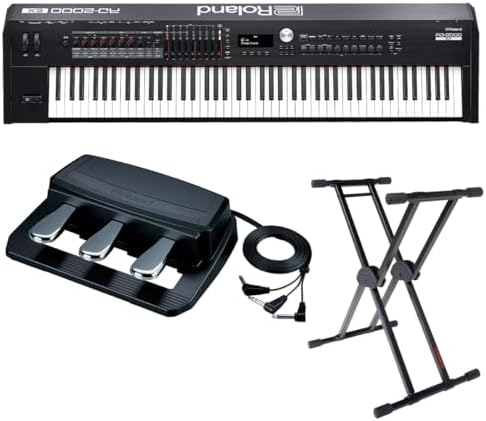
#1 – Roland RD-2000 EX Digital Stage Piano
Best for: you want 88 keys, USB audio interface support, and a control layout built around 9 sliders and 8 knobs.
Why the Roland RD-2000 EX Digital Stage Piano is our #1 pick
- Listed at $1479.99 in November 2026 – entry among those compared; the price moves, so check it
- 5.0 rating from 1 ratings
key count: 88-Key
Against the other picks on key count, pick #3 states 88.

#2 – Yamaha CP88
Best for: you want 88 natural wood keys, Graded Hammer (GH3) action, and an included FC3A sustain pedal.
Why the Yamaha CP88 is our #2 pick
- Listed at $1299.99 in November 2026 – entry among those compared; the price moves, so check it
- 4.3 rating from 45 ratings
key count: 88-Key
To put that key count in context, pick #3 states 88.

#3 – Roland RD-88
Best for: you want 88 keys, an onboard speaker system, and Apple MainStage integration in a lighter stage setup.
Why the Roland RD-88 is our #3 pick
- Listed at $1429.99 in November 2026 – entry among those compared; the price moves, so check it
- 4.3 rating from 128 ratings
key count: 88
For comparison on key count, pick #1 states 88-Key and pick #2 states 88-Key.
For a deeper dive into the vintage organ and EP sounds, see our full Nord Electro 6HP breakdown.
How Top Discounts picked: we started from the 200 most-reviewed stage piano listings in our retail dataset, removed duplicates, accessories and off-category products, and 35 qualified. The picks on this page were selected from those 35 candidates against this topic’s requirements. The order of the picks reflects fit to this topic; each shows its rating and the number of ratings behind it, so you can weigh how much to trust it. Specifications come from manufacturer listings and ratings from verified Amazon buyer reviews (data checked November 2026).
Our Verdict and How We Chose
A stage keyboard for jazz players makes the most sense when you need a rig that handles rehearsal, club work, and home practice without changing instruments.
Roland RD-2000 EX Digital Stage Piano fits that scenario because its 88-Key layout and USB audio interface support both piano range and computer-based setups. The Yamaha CP88 is the alternative if you want a sustain pedal included and a stainless steel chassis. The Roland RD-88 suits players who want an onboard speaker system for practice or smaller rooms.
We screened 35 Stage Pianos at Top Discounts and compared 10 in this page’s table for jazz players who need full-size stage boards with different live and practice trade-offs. The shortlist runs from $1,299.99 to $1,479.99, while the median price of the 10 products in our comparison is $2,087.20.
What This Page Concludes About Stage Pianos for Jazz Players
- Top pick: Roland RD-2000 EX Digital Stage Piano at $1479.99 (key count: 88-Key).
- Also picked: Yamaha CP88 at $1299.99; Roland RD-88 at $1429.99.
- We compared 10 Stage Pianos, from $192.49 to $5999, median $2087.20.
- Best buyer rating in the comparison: Yamaha CP88 at 4.3/5 from 45 ratings.
Stage Pianos for Jazz Players: Price, Rating and Specs Compared
| Product | Price | Rating | key count |
|---|---|---|---|
| Roland RD-2000 EX Digital Stage Piano | $1479.99 | 5.0 (1 ratings) | 88-Key |
| Yamaha CP88 | $1299.99 | 4.3 (45 ratings) | 88-Key |
| Roland RD-88 | $1429.99 | 4.3 (128 ratings) | 88 |
| Roland RD-2000 | $3999 | 4.2 (62 ratings) | 88 |
| Kurzweil SP6 | $1499 | 5.0 (7 ratings) | 88-key |
| Nord Piano 88 | $2675.40 | 5.0 (1 ratings) | 88 keys |
| Nord Electro 6D 61 | $5999 | 4.3 (47 ratings) | 61-key |
| Nord Electro 6HP | $3999 | 4.2 (5 ratings) | 73-key |
| Nord 3 88-Key Stage Piano | $192.49 | 4.1 (5 ratings) | 88-Key |
| Kurzweil SP7 Grand | $5999 | 3.7 (5 ratings) | 88-key |
Prices are approximate and move frequently – check the current price before deciding. “Not stated” means the manufacturer listing does not give that figure – we do not estimate it.
Roland RD-2000 EX Digital Stage Piano fits this topic best because its 88-key layout, PHA-50 keyboard, and MAIN/SUB outputs support jazz comping and split work.
Each Pick for Jazz Players, Reviewed in Detail
The 3 picks below are reviewed in the same order as the cards above.
Roland RD-2000 EX Digital Stage Piano
The Roland RD-2000 EX Digital Stage Piano suits jazz players who want an 88-key stage piano with deep live control and a piano-first layout. Its key count gives you the full range that supports two-handed comping, walking bass, and split setups without range pressure.
What we like: The 88-key layout is the main reason it works here, and the PHA-50 keyboard with escapement and ebony/ivory feel points toward a weighted action keyboard for jazz phrasing. The V-Piano and SuperNATURAL engines, plus 9 sliders, 8 knobs, and a pitch bend lever, give you more control for split and layer modes, where two sounds or zones run together. Around $1,479.99, it also sits in the premium end of this group without dropping the full-size format.
Keep in mind: The damper pedal is included, but the listing does not state onboard speakers. That makes it a better fit if you already plan to use an amp, mixer, or interface rather than a self-contained practice setup.
Yamaha CP88
The Yamaha CP88 is the most straightforward jazz digital piano in this group for players who want an 88-key stage piano with a lighter price than the Roland flagship. Its full key count keeps the left hand freer in comping and split work than a 61-key board.
What we like: The 88 Natural Wood keys and GH3 action give it the kind of weighted feel many jazz players look for in a portable piano. Three grand pianos, two upright pianos, and five electric pianos make the sound set easy to shape around standards, trio work, and fusion gigs. At around $1,299.99, it is the least expensive of the three picks here.
Keep in mind: The 1-pound weight figure is clearly not the full instrument weight, so the listing leaves portability unclear. It states a sustain pedal, but it does not state onboard speakers, so this is still a stage rig rather than a self-contained practice board.
Roland RD-88
It keeps the full key count, so you do not give up range just because you want a simpler setup.
What we like: The PHA-4 ivory feel keyboard keeps the action in the weighted-action keyboard lane, which matters more for jazz than extra sound features do. Its onboard speaker system is the clearest practical difference in this group, and the three zones with external control help if you use split and layer modes for bass, comping, and lead parts. The 128 ratings give you more buyer feedback than the other two picks here.
Keep in mind: The listing does not state pedal support, so you should not assume the same setup flexibility as the other two picks. It also leans less into the flagship control layout than the RD-2000 EX, so players who want the fullest hands-on stage control may prefer the higher-end Roland.
Follow our step-by-step advice in the buying guide.
View the technical specs side by side in the comparison table.
Discover installation details and the setup support information.
You can also explore detailed specs for the Yamaha CP88 to see how it handles professional performance.
The Specs That Decide a Stage Piano for Jazz Players
Touch Response For Comping And Solos
Look for 88 weighted hammer-action keys if you want jazz comping and solos to keep left-hand voicings and right-hand lines in the same range. Weighted hammer-action keys are the core feel for jazz phrasing, and the Yamaha CP88, Roland RD-2000 EX, and Roland RD-88 all use full 88-key layouts. The CP88 uses Graded Hammer (GH3) Action, while the RD-2000 EX uses PHA-50 with escapement and ebony/ivory feel. The RD-88 uses PHA-4 with ivory feel piano-touch keys. Yamaha’s CP88 is the benchmark for stage-piano feel and live control here, and its Natural Wood keys make that comparison concrete. The 61-key failure mode matters for piano-only players because left-hand comping runs out of room fast.
Rhodes And Acoustic Piano Voicing
Prioritize acoustic piano and Rhodes coverage if your jazz set moves between comping, solos, and electric-piano colors. The CP88 lists three grand pianos, two upright pianos, and five electric pianos, so it gives you the broadest stated piano palette here. The RD-2000 EX pairs V-Piano Technology with SuperNATURAL, which gives it two named sound engines for piano work. The RD-88 states SuperNATURAL pianos and electric pianos based on the RD series, so it leans into that family sound rather than a large voice count. Roland’s RD-2000 is the benchmark for dual-sound-engine stage pianos, and the RD-2000 EX follows that idea with two engines in one instrument.
Split And Layer Control For Trio Work
Use split and layer control to decide how easily you can cover bass, comping, and leads in a trio. The RD-2000 EX states nine sliders, eight knobs, MAIN/SUB outputs, and MIDI connectors, so it gives the most direct hands-on control of the three. The RD-88 states three zones with external control and Apple MainStage integration, which suits software-linked trio rigs. The CP88 states realtime controls and Seamless Sound Switching, so it favors smooth program changes over the denser control surface of the Roland. For trio work, the separated-field issue is control depth, not key count.
Pedal Response For Sustain And Half-Pedaling
Check pedal response for sustain and half-pedaling, because jazz phrasing depends on how much sustain control you can shape under the line. Half-damper support is the feature that lets a sustain pedal capture partial pedal positions, and it matters more than a simple on-off pedal for legato voicings. The RD-2000 EX states a damper pedal, and the CP88 includes an FC3A sustain pedal. The CP88 also states Graded Hammer action, which matters because pedal nuance works best when the keybed already supports controlled touch. The RD-88 does not state a pedal in the data here, so its pedal setup is not part of this comparison.
Direct Access To Organ And Electric-Piano Sounds
Go for direct access to organ and electric-piano sounds if you need quick changes between comping textures and solo colors. The CP88 states five electric pianos, so it gives you explicit Rhodes-style coverage without menu-hunting. The RD-2000 EX states assignable modulation wheels, a pitch bend lever, and modulation lever, which helps with live control of sound changes. The RD-88 states SuperNATURAL pianos and electric pianos, plus three zones, so it is the simplest of the three for mapped performance setups. For jazz players, the question is not just sound count; it is how fast you can reach the sound you need mid-set.
Each Job, What It Takes and How the Picks Do
Each row is a job this page’s buyers ask about, worked out from each pick’s listed key action weight and a typical need for the job.
| What you want to do | What it takes | How each pick does |
|---|---|---|
| Get a piano-like feel for acoustic-piano parts | at least 20 to 30lb | Roland RD-2000 EX Digital Stage Piano: not stated; Yamaha CP88: not stated; Roland RD-88: not stated |
| Use weighted keys for jazz comping and acoustic-style voicings | at least 18 to 28lb | Roland RD-2000 EX Digital Stage Piano: not stated; Yamaha CP88: not stated; Roland RD-88: not stated |
Each need is a typical figure for that job rather than a manufacturer claim, and the picks’ results come from their listed specifications. Where your job is bigger or smaller than the typical one, go by your own figure.
Who Buys Stage Pianos, and What It Really Costs
Who buys a stage piano, and what each one needs
- Jazz piano students — need 88 keys for full repertoire coverage and two-handed voicings
- Church keyboardists — need 73 keys when left-hand bass and split parts still fit comfortably
- Hotel lounge players — need weighted action for piano dynamics and repeated comping figures
- Home practice households — need onboard speakers so the instrument can be played without extra amplification
- Gigging accompanists — need MIDI and USB-MIDI for controlling software instruments and recording setups
What a stage piano really costs, and where to buy one
What to budget for on top of the stage piano
- Keyboard stand — holds the stage piano at a playable height
- Sustain pedal — lets notes ring for jazz phrasing and voicings
- Bench or seat — supports long practice and performance sessions
- Amplification or monitor speaker — needed when the instrument has no onboard speakers
- Audio cables — connect the instrument to mixers, speakers, or recording gear
What you can leave out of the budget
- Keyboard case with wheels — unnecessary if the instrument mostly stays at home or in one venue
- Extra sound module — unnecessary when the stage piano already provides usable onboard sounds
- Second keyboard for layering — unnecessary if the player only needs piano parts and simple splits
- Large multi-pedal rig — unnecessary when basic sustain control covers the playing setup
Where this kind of product is normally sold
- Music instrument retailers — usually offer return windows, setup help, and warranty handling
- Pro audio stores — useful for comparing controllers, speakers, and cabling in one visit
- General online marketplaces — often have wider price swings and buyer-protection policies that vary by seller
- Used gear dealers — can lower the entry cost and may include inspection or short return periods
- Local piano shops — often bundle delivery, setup, and after-sale service for heavier instruments
What These Stage Pianos Need, and What to Check on Arrival
What these jazz stage pianos need before they work
- Roland RD-2000 EX Digital Stage Piano needs a keyboard stand and a damper pedal. Its 88-key layout also makes a full-size playing surface part of the setup.
- Yamaha CP88 needs a keyboard stand and a sustain pedal. Its FC3A Sustain Pedal is listed as included, so that connection point is already covered.
- Roland RD-88 needs external amplification if you want sound in the room, because it states no built-in speakers beyond its onboard speaker system. That matters for rehearsal rooms and practice spaces where you do not want to rely on a PA.
- The CP88 states XLR 1/4 inch (6.35mm) connectivity instead, which suits a PA or interface path.
What to check on arrival for a jazz keyboard
Cover differs by seller and country, so the first check is physical condition and the parts that make the piano playable.
- Check the 88-key action for any shipping damage. A full-size keybed is the core of all three picks, and a bent or sticky key changes the whole instrument.
- Confirm the pedal connection matches what you ordered or already own. The RD-2000 EX states a damper pedal, while the CP88 states a sustain pedal, and both affect how the instrument responds under jazz comping.
- Inspect the audio and MIDI sockets before the return window closes. The RD-2000 EX states MIDI connectors and USB ports, and the CP88 states XLR 1/4 inch (6.35mm) connectivity; those ports matter if you run through a PA or computer.
- For the RD-88, verify the onboard speaker system powers up cleanly. That feature is the difference between a self-contained practice piano and one that always needs outside sound reinforcement.
Play a few left-hand voicings and a walking line on the first day, while a return is still possible.
See our curated list of the top picks for quick browsing.
Learn about the included models and the article scope here.
Get answers to common questions in the FAQ.
Buying Questions About Stage Pianos for Jazz Players, Answered
How much should I spend to get a stage piano that is good enough for serious jazz gigs?
For serious jazz gigs, the stage piano that fits is usually the one with 88 keys, a weighted action, and live outputs. In this group, the Roland RD-2000 EX is around $1,479.99, the Yamaha CP88 is around $1,299.99, and the Roland RD-88 is around $1,429.99. Choosing against those data points can cost you a return and a second purchase if the action or connections miss your setup.
What outputs and connections do I need for jazz gigs, recording, and using a pedal?
For jazz gigs, recording, and using a pedal, look for MIDI, USB-MIDI, and the outputs you need for your rig. The Roland RD-2000 EX states MAIN/SUB outputs, pedal jacks, MIDI connectors, and USB ports with AUDIO/MIDI support, while the Yamaha CP88 states XLR and 1/4 inch output connectivity plus an FC3A sustain pedal. The RD-2000 EX also states a USB audio interface, which matters if you want one keyboard to cover stage and computer recording.
Which jazz digital piano should I buy if I want a flagship feel?
If you want a flagship feel, the Roland RD-2000 EX is the pick here because it pairs 88 keys with PHA-50 action, escapement, and ebony/ivory feel. It also states V-Piano Technology, SuperNATURAL sound, nine sliders, and eight knobs for live control. That mix suits an upgrader who wants one board to cover piano parts and stage control.
Which portable jazz piano suits a lighter setup?
The portable jazz piano that suits a lighter setup is the Roland RD-88, because it states a lightweight and compact design plus an onboard speaker system. It also uses an ivory feel PHA-4 keyboard and three zones with external control, so you still get stage flexibility. The built-in speakers matter if you want a self-contained practice rig, since many stage pianos do not state them.
Explore the individual nuances of every model in the detailed reviews.
Check the essential technical minimum requirements before you buy.
Find which model matches your style in the audience checklist.
Who Should Skip These Stage Pianos
That range runs out fast in left-hand comping and split setups, and none of these picks is a 61-key board.
Every stage piano guide in this category
Top Discounts is reader-supported: some links on this page are affiliate links, and as an Amazon Associate Top Discounts earns from qualifying purchases at no extra cost to you. Learn more.