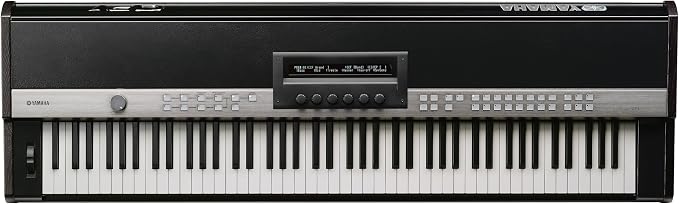
Yamaha CP1
CP1 uses SCM tone generation with NW Stage action, so it suits you if piano response matters most.
$31 under the category median
- This Stage Piano
- $155.99
- Median of the 35 Stage Pianos we screened
- $186.76
- Range
- $133.80 to $5999
- Cheaper than this one
- 10 of those 35
4 deciding specs not stated
- key count
- Not stated in the listing – confirm with the seller before ordering
- key action weight
- Not stated in the listing – confirm with the seller before ordering
- onboard speaker power
- Not stated in the listing – confirm with the seller before ordering
- MIDI connectivity
- Not stated in the listing – confirm with the seller before ordering
Suits piano students practicing classical repertoire
- Piano students practicing classical repertoire
- Church keyboard players
- Home studio composers recording piano parts
- Gigging keyboardists in small venues
5.0/5 from 1 buyers
- Average buyer rating
- 5.0 out of 5
- Ratings behind it
- 1
- What that supports
- Too small a sample to conclude anything either way
- Where it comes from
- The product listing, read 5 November 2026
The CP1 in Short
Yamaha CP1 drives CP1 Stage Piano use with 3-pedal units for you if you want a stage piano with full pedal control.
If you are building a rig around pedal control, a stage piano with sustain, sostenuto, and soft functions keeps your foot work in one place.
Yamaha CP1 suits that setup because it includes a three-pedal unit and a continuous sustain function. The Spectral Component Modeling tone generation system and modeled preamp add a second reason to consider it for piano-centered live work.
We screened 35 Stage Pianos and this is one of 15 chosen for a full review. CP1 ranked 14th by buyer ratings among the 35 screened listings, and it has 1 buyer rating. That sample is too small to settle anything about quality or reliability. Full reviews go to the most-rated products that pass screening, at most 2 per brand. This review is for you if your current board leaves pedal work too limited for your parts.
You might also consider our full review of the Kawai MP11 for a different feel.
How Top Discounts picked: we started from the 200 most-reviewed stage piano listings in our retail dataset, removed duplicates, accessories and off-category products, and 35 qualified. This product is one of 15 from that pool chosen for a full review. Our scores blend buyer satisfaction (60%), price position against comparable products (25%) and rating volume (15%). Specifications come from manufacturer listings and ratings from verified Amazon buyer reviews (data checked November 2026).
The Short Answer on the CP1
Best for: you want a stage piano with wooden white keys, NW Stage action, and a three-pedal unit already included.
Choose the CP1 if you want that hardware package at around $155.99.
- Pro: Wooden white keys and NW Stage action give you a weighted playing surface for piano parts.
- Pro: The included three-pedal unit adds continuous sustain, sostenuto, and soft control.
- Pro: The Piano-optimized Sound Engine and Spectral Component Modeling tone generation system give it two named sound-generation sections in the listing.
- Con: It states sustain pedals, but not onboard speakers, so you will need external amplification for practice or performance setups that depend on built-in sound.
Price assessment: At around $155.99, the CP1 sits in the low-to-mid range for a stage piano with an included three-pedal unit.
Top Discounts score: 7.9/10 (data-driven – see “How we picked” above)
Key Specifications for This Stage Piano
| Spec name | Value |
|---|---|
| Key count | Not stated |
| Pedals | sustain |
| Includes | 3-pedal units |
| Power supply | Included |
| Tone generation system | Spectral Component Modeling (SCM) |
| Key action | NW Stage action |
| Keys | Wooden white keys |
| Weighting | Even weighting |
| Sound engine | Piano-optimized Sound Engine |
| Preamp | Modeled preamp |
Key action separates the CP1 most clearly here. Key action measures how much force the keys need and how heavy the action feels.
Where this sits in the buyer data: Among the 17 products screened for this category, this one’s 5.0 rating places it #1, on 1 ratings – below the 7-rating median of that group, so treat the average as less settled than its comparables. On price it undercuts 24 of them.
Before You Buy: Stage Piano Checklist
The first thing to check is whether you need a full-size stage piano with a three-pedal setup. CP1 states 3-pedal units, a sustain pedal, sostenuto, and soft functions, so it suits piano-style control more than a bare sustain-only board.
- ☐ Confirm the key action — NW Stage action and wooden white keys mean this is aimed at weighted piano parts; if you want a light synth feel, you will end up returning it or living with a heavier touch.
- ☐ Measure your stand and transport space — the CP1 is a stage piano, not a 61-key compact board, so a small stand or tight case can force a re-buy or a different rig.
- ☐ Check your pedal needs — includes 3-pedal units with sustain, sostenuto, and soft functions; if you only need basic sustain, you may pay for pedal control you will not use.
- ☐ Budget for the full setup — includes power supply, so if you expected a self-contained battery rig, you will need mains power or a different instrument.
- ☐ Confirm you want piano-focused sound shaping — Spectral Component Modeling, Piano-optimized Sound Engine, and a modeled preamp point this toward acoustic-piano work; if you need a pure controller with no tone engine, this is the wrong purchase.
If you want a lightweight 61-key portable piano or a simple unweighted controller, do not buy the CP1.
What the Numbers Mean in Use
How Tone Generation Shapes Piano-Centric Playing
CP1 gives you Spectral Component Modeling tone generation and a Piano-optimized Sound Engine, so you can build a piano part around modeled response rather than a generic keyboard voice. That matters if you want a stage piano that keeps the piano role central in a solo set or a band mix.
The modeled preamp adds another layer for players who want the sound chain to stay piano-focused at the output stage. If you are upgrading from an older stage piano, that extra tone-shaping path gives you more room for repertoire that leans on detailed piano color, while staying within a single instrument voice.
How Key Action Supports Balanced Two-Hand Control
CP1 uses NW Stage action with wooden white keys and even weighting, so you get a weighted playing surface suited to piano parts. If you play repertoire that depends on balanced left-hand comping and right-hand melody, that action supports the same kind of two-hand control you expect from a stage piano rather than a light synth board.
The wooden white keys also matter for players who want a more piano-like keybed under repeated practice and set-list work. Because the action is weighted, it favors acoustic-piano technique over fast unweighted lead lines, and that is the trade-off you need to accept here.
How Pedal Control Covers Three Classical Functions
Yes, the CP1 states sustain, sostenuto, and soft pedal control, so you can cover the three pedal functions that classical pieces often call for. The three-pedal unit gives you all three functions in one setup, and the continuous sustain function supports half-pedal style control for passages that need finer sustain handling.
That pedal set is useful if you want to move beyond simple on-off sustain and keep classical phrasing options open on a stage piano. The sostenuto function helps with held notes under changing hand parts, while the soft function gives you a quieter pedal option for passages that call for reduced attack without leaving the instrument.
How the CP1 Compares to Alternatives
CP1’s clearest edge is the included control set: it comes with a three-pedal unit, while the comparison roll-up models do not state any pedals. It also lists NW Stage action, wooden white keys, and a sustain, sostenuto, and soft pedal set in the same package.
- Against the Gohbqany Roll Up Piano, CP1 gives you a real stage-piano control layout instead of a 49-key roll-up design. That matters if you want weighted-style playing and pedal control, not a compact toy-style layout.
- Against the Hand Roll Keyboard, CP1 adds a piano-optimized Sound Engine and Spectral Component Modeling tone generation system. The other model only states built-in stereo speakers and a premium silicone keyboard.
- Against the Portable Roll Up Piano, CP1 includes a power supply and a three-pedal unit. The competitor states neither item.
- Against the DEPRQ Roll Up Piano, CP1 is the only one here that states a modeled preamp. DEPRQ only lists a rollable design and soft touch plastic material.
- Against the Dertyped Roll Up Piano, CP1 is the only model in this comparison with a stated pedal set, and it also has the highest rating rank here. That rating is 5.0 from 1 buyer rating, so the sample is too small to settle anything about quality.
If you want the lowest price in this group, the Hand Roll Keyboard is the cheaper pick at $154.68. Choose CP1 instead when the three-pedal unit and NW Stage action matter more than saving $1.31.
For those needing a larger action, read our full review of the CP88.
If you prefer a more compact footprint, see how the CP300 performs in our review.
Getting the CP1 Working, and What to Check After
Getting the CP1 ready to play
- Place the CP1 on a keyboard stand that supports its full width and keeps the NW Stage action at a playable height.
- Connect the included power supply before you power up, since the listing states that the unit includes power supply.
- Attach the included three-pedal unit if you want the continuous sustain function, sostenuto function, and soft function to be available.
- Power on the CP1 and select a piano voice through the Piano-optimized Sound Engine and SCM tone generation system.
Warranty and support checks for the CP1
Cover differs by seller and country.
- Confirm the return window before you open the box, because the CP1 includes a power supply and a three-pedal unit that are easy to misplace once unpacked.
- Confirm whether the sustain pedal you plan to use matches the CP1’s sustain input, because the listing states sustain pedal support but not the exact connector type.
- Confirm that the three-pedal unit is included in the sale, because the CP1’s pedal functions depend on that accessory for full use.
- Confirm who handles support for the wooden white keys and NW Stage action, because those are not user-serviceable parts.
On arrival, test the power supply, the three-pedal unit, and the sustain function while the return window is still open.
What Buyers Still Want to Know About This Stage Piano
Is the included power supply enough, or do I need to buy anything else to get started?
Yes, the included power supply is enough to get the CP1 powered up. The listing also states three-pedal units, so the starting bundle is broader than power alone. A sustain pedal is listed separately in the product data, but the page does not state any extra cable or stand requirement.
What does the three-pedal unit add to the Yamaha CP1?
The three-pedal unit adds sustain, sostenuto, and soft control. That gives you the same pedal set many acoustic-piano players expect, which matters if you use layered parts or half-pedal work. CP1 also states a continuous sustain function, so the pedal setup is part of the instrument’s control story, not just an accessory note.
How many keys does the Yamaha CP1 have?
CP1’s key count is not stated in the data above. That means this page can confirm the NW Stage action and wooden white keys, but not the keyboard size. For an upgrader, the missing key count matters because range is what decides whether splits and left-hand parts stay comfortable.
Does the Yamaha CP1 suit piano-focused players?
Yes, the CP1 leans toward piano-focused players through its NW Stage action, wooden white keys, and piano-optimized Sound Engine. Those details point to a setup built around acoustic-piano technique rather than a general-purpose synth layout. The listing also names Spectral Component Modeling, which is the tone-generation system behind its sound design.
Is the CP1 Right for You?
Who the CP1 suits and the jobs it is the wrong choice for, listed below with the reason for each.
Who this stage piano is for, and what it does well
Who the CP1 suits
- Piano students practicing classical repertoire — the NW Stage action, wooden white keys, even weighting, and three-pedal unit support realistic technique and pedaling
- Church keyboard players — continuous sustain, sostenuto, and soft functions make it suitable for hymns, pads, and expressive accompaniment
- Home studio composers recording piano parts — the piano-optimized Sound Engine and modeled preamp suit direct, detailed keyboard tracking
- Gigging keyboardists in small venues — the included power supply and three-pedal unit make it ready for stage-style use without extra pedal shopping
- Jazz accompanists and rehearsal pianists — the SCM tone generation system and full pedal set support nuanced voicing and sustain control
- Music teachers setting up a practice room — the weighted wooden keys and included pedals make it practical for lessons focused on proper piano touch
What this stage piano handles well
- Classical piano practice — NW Stage action and wooden white keys support realistic finger technique
- Pedal technique exercises — continuous sustain, sostenuto, and soft functions support advanced pedaling work
- Church accompaniment — three-pedal unit and modeled preamp support expressive hymn and service playing
- Studio MIDI-style piano tracking — piano-optimized Sound Engine supports detailed piano parts for recording
- Jazz comping and ballad playing — even weighting and SCM tone generation support dynamic control and tonal nuance
- Home practice setup — included power supply and three-pedal unit support a complete keyboard station
What this stage piano is the wrong choice for
- Portable busking setups — the included three-pedal unit and stage-piano format make it less convenient to carry around often
- Organ-style registrations and drawbar playing — the specs focus on piano-optimized sound rather than organ controls
- Synth lead and pad performance — the piano-optimized Sound Engine and SCM tone generation are aimed at piano sounds, not synth editing
- Silent headphone practice on the go — no headphones are listed in the specs, so it is not a ready-to-use personal practice kit
- Full-band controller duties with lots of knobs and splits — the listed specs center on piano action and pedals, not deep controller features
What to budget alongside this stage piano, and what to skip
Accessories worth buying with the CP1
- Keyboard stand — needed to support the stage piano during practice or performance
- Bench or piano stool — needed for proper seated playing posture with the weighted action
- Audio cable — needed to connect the piano to speakers, a mixer, or an audio interface
- Amplified speaker or keyboard amp — needed because the specs do not include built-in speakers
- Headphones — needed for private practice since no headphones are included in the specs
Accessories you can skip buying for this stage piano
- Three-pedal unit — you can skip it because it is already included
- Power supply — you can skip it because it is already included
- Separate sustain pedal — you can skip it because the three-pedal unit already covers sustain
- Extra pedal board — you can skip it because the included three-pedal unit already provides the core piano pedals
Where to Buy This Stage Piano
The CP1 sat at $155.99 in the listing data from November 2026; the price you see at checkout can differ.
Stage pianos are sold by the retailers below – we do not track which of them has the CP1 in stock, so check availability and the current price with the retailer before making a trip.
- Piano World (online only) — specialist focus on digital pianos and stage pianos
- Amazon (online only) — broad marketplace selection and easy comparison shopping
- Sweetwater (online and physical stores) — specialist staff and a broad range for stage pianos
- Guitar Center (online and physical stores) — in-store returns and a wide selection across major keyboard brands
- Music & Arts (online and physical stores) — local store support and ordering help for keyboard buyers
- B&H Photo Video (online and physical stores) — breadth of range for pro audio and keyboard gear
- Sam Ash (online and physical stores) — specialist music retail experience for stage pianos
Final Verdict on the CP1
You should choose the Yamaha CP1 if you want a stage piano with a wooden-key NW Stage action and a three-pedal unit, and the price is around $155.99. The continuous sustain, sostenuto, and soft functions give you the full pedal set for piano parts that need more than a simple sustain switch.
The strongest data point is the pedal set: CP1 includes three-pedal units, and that matters if your older board only gave you sustain. It also states a 5.0 average from 1 buyer rating, but that sample is too small to settle anything about quality or reliability.
Skip it if: you need onboard speakers, or you want a lighter action than NW Stage for fast portability.
Where to go next in our stage piano coverage
Top Discounts is reader-supported: some links on this page are affiliate links, and as an Amazon Associate Top Discounts earns from qualifying purchases at no extra cost to you. Learn more.