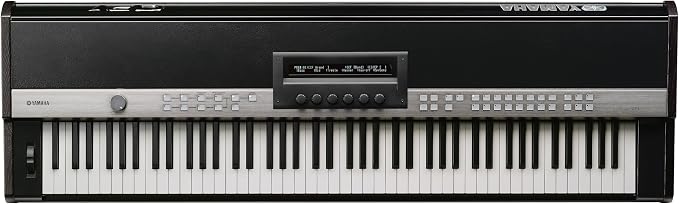
We picked it out of the stage-piano options for a full review because those controls are central to piano technique, and the CP1 includes them as separate functions. If your own rig already uses a Sustain Pedal with a standard connector, count the pedal input on your setup first; a mismatch means you need different hardware.
CP1 sound engine, action, and three-pedal control
The CP1 uses Spectral Component Modeling, which is Yamaha’s tone-generation system for this stage piano, and it pairs that with a piano-optimized sound engine and modeled preamp. The action is NW Stage, with wooden white keys and even weighting, so the playing surface is built around piano-style control rather than synth-style speed. For a stage piano buyer, this topic matters because the pedal set changes how you shape phrases, and the three-pedal unit is part of that control set.
For a deeper dive into the specifications, see our comprehensive Yamaha CP1 review.
What to Check Before Buying the CP1
- Confirm that you need continuous sustain, sostenuto, and soft functions. The CP1 provides all three through its three-pedal unit.
- Check whether your setup already has a standard Sustain Pedal connection. The listing does not state a proprietary-only pedal port, so your existing gear is the first thing to verify.
- Look at your external expression workflow if you need MIDI CC mapping. The listing names SCM and the sound engine, but it does not state real-time MIDI CC control for external controllers.
- Plan for power at the rig level. The CP1 includes a power supply, so the pedal unit does not need to be treated as a separate power source from the listing data.
- Measure whether you want a piano-first action. NW Stage, wooden white keys, and even weighting point to a control layout for piano parts, not a lightweight portable compromise.
Where the CP1 Fits in the Stage Piano Range
CP1 suits you if your priority is pedal nuance and a piano-centered action in a stage piano. It is less attractive if you need explicit MIDI CC mapping for external expression controllers, because that detail is not stated here. It also makes less sense if you want a simpler setup with fewer moving parts, since the three-pedal unit and included power supply point to a more complete rig. A 5.0 average from 1 buyer appears in the listing, but that sample is too small to settle anything about quality or reliability.
You can find a detailed head-to-head comparison of the Yamaha CP1 in our analysis.
Choose CP1 if you want a stage piano with continuous sustain, sostenuto, and soft pedals, plus a weighted piano action for repertoire work. Skip it if your decision depends on confirmed MIDI CC control or a different pedal connection standard than your current setup already uses.
To see the final summary, view our quick verdict on the CP1.
The rest of our stage piano guides
- Choosing the Best Stage Piano for Studio Recording
- The Stage Pianos That Work Best for Small Apartments with Built-in Speakers
- Which Stage Piano Is Best for Weighted Keys?
- Choosing the Best Stage Piano for Beginners Under $1000
- The Stage Piano That Works Best for Gigging Musicians
- Which Stage Piano Is Best for Home Practice?
Top Discounts is reader-supported: some links on this page are affiliate links, and as an Amazon Associate Top Discounts earns from qualifying purchases at no extra cost to you. Learn more.