Electronic drum kits come in three meaningfully different types: tabletop pads, rubber-pad kits, and mesh-pad kits. The split that changes a buying decision is pad construction, because it affects playing area, articulation, and price. Check how much space you have and whether you need separate rim work before you choose a type.
Electronic Drum Kit Types Among the Listings We Screened
| Type | What sets it apart | Listings we screened | Price range | Median snare pad size |
|---|---|---|---|---|
| Compact tabletop electronic drum kits | drum kit type: tabletop pads | 3 | $139.18 to $181.99 | – |
| Entry-level rubber-pad electronic drum kits | drum kit type: rubber pads | 3 | $143.98 to $249.99 | – |
| Mid-range mesh-pad electronic drum kits | drum kit type: mesh pads | 52 | $143.98 to $899 | 8in |
Counted over the 66 listings this site screened; a listing that does not state the figure a type is defined by is not counted under any type.
Beginners can find the perfect starter gear in our guide to learning drums.
Where these choices show up in our reviews
Prices across these 3 run from $178.99 to $399.99; each one has a full review here.
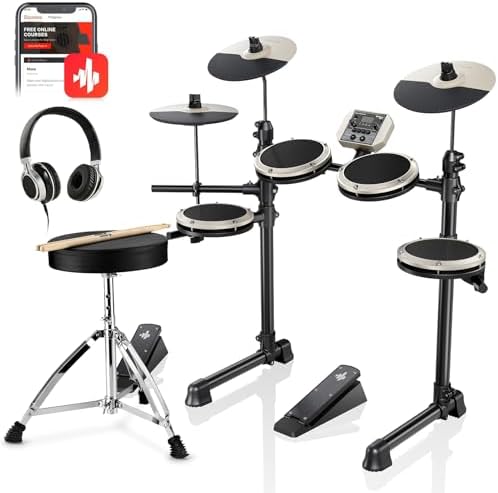
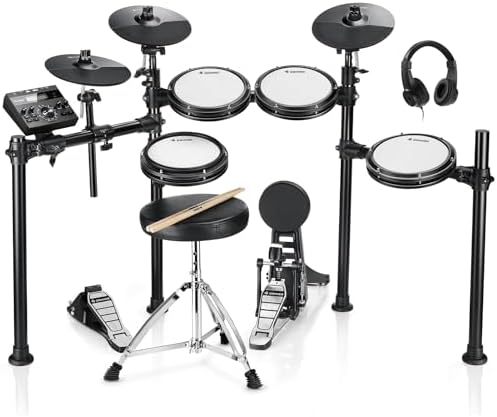

Compact Tabletop Electronic Drum Kits
Compact tabletop electronic drum kits use pads mounted on a small surface, so they suit tight spaces and quick setup. They sit at the lowest price band among the types here, and the smaller footprint is the main tradeoff against fuller pad layouts.
If you want wireless connectivity, see how to do bluetooth drum practice at home.
These kits make sense if you need a practice surface that stays close to a desk, shelf, or portable stand. Roland V-Drums is the benchmark for pad feel and triggering, while tabletop kits usually give up that larger, more traditional playing layout.
Parents looking for a first instrument can view the top electronic drum kit for kids.
If your space is fixed and narrow, this type saves room that a floor-standing kit would occupy. The cost of choosing the wrong type is a return or a second purchase when the layout feels too cramped for regular practice.
Entry-Level Rubber-Pad Electronic Drum Kits
Entry-level rubber-pad electronic drum kits use rubber playing surfaces, which keeps them in the lower-middle price band. They are the right fit when you want a full kit layout without moving into mesh-pad pricing.
It is important to verify all certifications and safety standards for electronic drum kits.
Rubber pads usually give you a simpler step up from tabletop layouts, with enough separation between pads for basic coordination work. The compromise is the playing surface itself, since rubber is the failure mode that cuts realism compared with mesh.
Newcomers can learn the basics by reading how an electronic drum kit works.
Buyers who need a starter kit for occasional practice often land here first. Yamaha DTX series is a response and build-quality benchmark, and rubber-pad kits are the cheaper branch that still gives you a complete drum layout.
Mid-Range Mesh-Pad Electronic Drum Kits
Mid-range mesh-pad electronic drum kits use mesh heads, which give a more realistic stick target and rim-zone control. They occupy the broadest price band here, and they are the type to target when separate articulations matter.
For a deeper look at that specific model, see our full review of the EDS750.
Mesh pads are the practical choice if you want a snare that behaves more like a real drum head.
Detailed performance data is available in our full review of the Debut Kit.
This type gives you the clearest path toward better response, especially where rimshots and finer stick placement matter.
If you are choosing for regular practice rather than occasional use, prioritize mesh over rubber. The mistake costs time as well as money, because a smaller or less detailed pad layout can force another upgrade later.
Check out our full review of the DED-70 to see its capabilities.
Electronic Drum Kit Type Comparison
| Type | Best-fit buyer | Main advantage | Main compromise |
|---|---|---|---|
| Compact tabletop electronic drum kits | People with very limited space or a desk-based setup | Small footprint and quick placement | Less traditional playing layout |
| Entry-level rubber-pad electronic drum kits | First-time buyers who want a full kit at a lower cost | Complete layout at the lower-middle price band | Rubber playing surfaces |
| Mid-range mesh-pad electronic drum kits | Regular players who want better response and rim control | Mesh heads with more realistic stick targeting | Higher cost than rubber-pad kits |
Which Electronic Drum Kit Type Fits You?
Choose a compact tabletop electronic drum kit if your practice spot is narrow and you need the smallest footprint. Choose an entry-level rubber-pad electronic drum kit if you want a full layout and your budget stays near the lower-middle band. Choose a mid-range mesh-pad electronic drum kit if rim work, response, and a more realistic snare surface matter more than saving money.
You can see how the entry-level model performs in our full review of the PTED06.
If you need convincing open and closed hi-hat work, avoid any kit that omits a hi-hat controller input. If you want separate rimshots and articulations, avoid single-zone pads, because that failure mode removes those options entirely.
Browse our other digital drum set pages
- Choosing the Best Electronic Drum Kit for Small Spaces
- The Electronic Drum Kits That Work Best for Home Use
- Which Electronic Drum Kit Is Best for Recording?
- Best Electronic Drum Kit for Learning Drums
- Practicing Bluetooth Drum at Home With an Electronic Drum Kit
- Which Electronic Drum Kit Works for Drum Practice With Headphones?
Top Discounts is reader-supported: some links on this page are affiliate links, and as an Amazon Associate Top Discounts earns from qualifying purchases at no extra cost to you. Learn more.