An electronic drum kit is a set of pads, cymbals, pedals, and a drum module that turns strikes into drum sounds. You need one when you want quieter practice, compact storage, or MIDI control in a smaller space. Measure your room, your headphone use, and the number of pads you need before you compare anything else.
Electronic drum kits solve volume and control problems
The problem it solves is volume and control. Acoustic drums fill a room fast, while an electronic drum kit lets you shape the sound, practice with headphones, and connect to other gear. The tradeoff is clear: the cheaper the kit, the more likely you are to give up pad count, cymbal count, or a more complete hi-hat setup.
How an Electronic Drum Kit Works
Most electronic drum kits follow the same chain: you strike a pad, the pad sends a trigger signal, and the drum module plays the assigned sound. The result depends on how many pads, cymbals, and control inputs the kit includes.
For parents looking for a starter instrument, we have curated a list of great electronic drum kit options for kids.
- You hit the pad surface.
- The pad sends a trigger through a cable.
- The drum module reads that trigger and chooses a sound.
- The module sends audio to headphones, speakers, or recording gear.
- The hi-hat pedal changes open and closed hi-hat articulation.
- The kick pedal triggers the bass drum sound.
Common trigger and MIDI connections simplify expansion
1/4-inch TRS trigger inputs matter because they are the common pad-cable format used for most electronic drum triggers. If a kit uses this format, replacing or adding pads is usually simpler than with a less common connection. 5-pin DIN MIDI matters for older modules and external gear, since it is the legacy hardware standard for connecting modules and other devices.
Electronic Drum Kits we have reviewed in detail
Prices across these 3 run from $178.99 to $399.99; each one has a full review here.
To see which models offer the best reliability, view our comparison of the best electronic drum kit for home use.

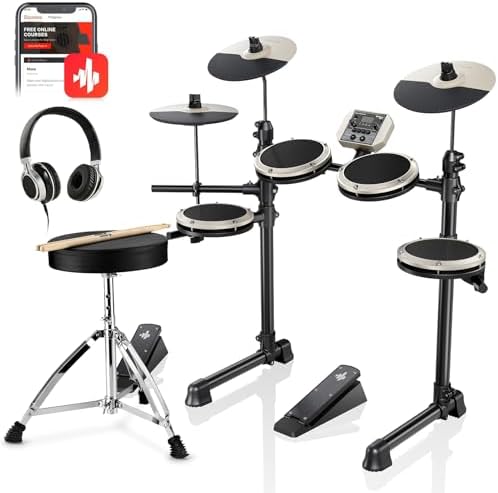
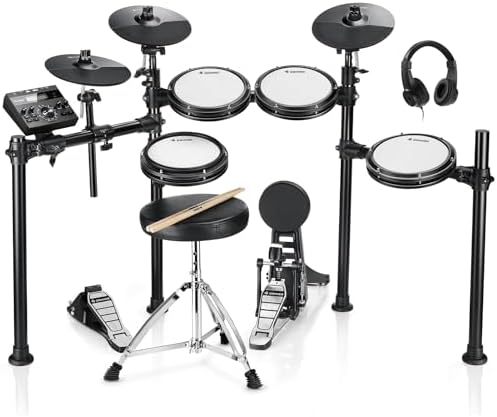
Key Parts That Change the Result
The drum module is the control center for sounds and settings. It decides which sample plays, how the kit responds, and what happens when you change volumes, layers, or trigger assignments.
The hi-hat pedal controls open and closed hi-hat articulation. A kit with a dedicated input for it gives you more realistic foot control than a setup that treats the hi-hat like a simple on-off switch.
For musicians who need high-fidelity output, we analyzed the best electronic drum kit for recording in a studio.
The kick pedal triggers the bass drum sound. If you care about foot technique, the pedal matters as much as the pads, because it is the part that turns your foot motion into the low-end pulse.
Pad, snare, and cymbal counts shape playing feel
Pad count changes how many separate striking surfaces you get. Snare pad size changes the playing area for the snare, and a 10-inch snare pad gives you a more realistic stick target than a smaller head. Cymbal count changes how many cymbal zones or pads you can assign for crashes, ride work, and hi-hat duties.
Single-zone pads are a failure mode here. You lose rimshots and separate articulations, so the kit gives you less control over the same drum part.
If you are confused by technical jargon, visit our guide on common electronic drum kit terms and specs explained simply.
What An Electronic Drum Kit Changes In Practice
An electronic drum kit changes where you can practice, how loud you can play, and how much detail you can ask from the kit. Headphones make late sessions possible, and a compact frame can fit spaces that will not take an acoustic shell set.
The difference shows up most when you need controlled volume and repeatable sound. It matters less if you already have a treated room, a full acoustic kit, and no need for silent practice.
Understanding different configurations is easy when you see the different types of electronic drum kits explained in detail.
Rubber pads are a drawback when quiet feel matters, because they are louder and less realistic to play than mesh. Mesh pads cost more, but they are the better fit when touch and noise both matter.
The usual advice changes if you need MIDI output for recording or software drums. In that case, the module’s connection options matter more than extra onboard sounds, because the external setup becomes part of the instrument.
For a deeper dive into that specific model, see our full review of the EDS750.
Is the pad layout enough for a beginner to learn on?
The pad layout is enough for a beginner when it gives you a snare, kick, hi-hat, and at least one tom and cymbal path. You outgrow it faster when the kit has few pads, no separate hi-hat control, or only single-zone striking surfaces. A 10-inch snare pad helps most at the start because it gives a clearer target for stick placement.
Is this worth the price for a first kit?
It is worth the price when the kit gives you the controls you will actually use, not just a long sound list. If the lower price removes the hi-hat pedal input or cuts pad count too far, you give up the parts that shape learning most. For a first kit, the right threshold is usually function before sound library size.
What do you give up at this price?
At a lower price, you usually give up pad count, cymbal count, or a more complete module. You may also lose 5-pin DIN MIDI, which matters if you want older hardware compatibility. The cheapest kits often save money by using simpler pads and fewer separate articulation options.
You can find a detailed breakdown of the features in our full review of the Debut Kit.
Is this a good starter kit for learning?
This is a good starter kit for learning when it lets you practice basic coordination without fighting the layout. You need enough surfaces to separate snare, toms, cymbals, kick, and hi-hat work. If the kit cannot do separate hi-hat control, your foot technique will lag behind your hand work.
Will I outgrow it fast?
You outgrow it fast when you already know you want rimshots, more cymbal positions, or a larger snare target. A beginner who only needs basic timing can stay with a simpler layout longer. A player who wants more realistic articulation will reach the limit sooner.
To see the technical specifications for that unit, look at our full review of the DED-70.
Is it worth the money for a first kit?
It is worth the money when the kit covers practice, not performance bragging rights. If you only need silent timing work and basic coordination, a simpler setup can make sense. If you need a stronger hi-hat response or more trigger inputs, save for the next tier instead.
Who Needs An Electronic Drum Kit And Who Does Not
You need an electronic drum kit if you practice at home, need lower volume, or want to connect to recording software. You also need one if your space cannot handle acoustic drum noise or size.
Detailed performance data is available in our full review of the DED-80.
You do not need one if you only want the acoustic response of a real shell kit and volume is not a problem. You also do not need one if you never plan to use headphones, MIDI, or trigger-based practice tools.
If you are choosing between quieter practice and fuller acoustic feel, prioritize space and volume first. If you already have room for acoustic drums, the electronic option becomes a convenience choice rather than a necessity.
The other digital drum set guides we have published
Top Discounts is reader-supported: some links on this page are affiliate links, and as an Amazon Associate Top Discounts earns from qualifying purchases at no extra cost to you. Learn more.