Synthesizer sequencer steps should usually be 16 steps or more. Use 8 to 16 steps only when you want a short loop that repeats without external gear, and keep 16 steps as the floor for most pattern-based work.
If your main job is bass riffs, live pattern changes, or FM-style textures, 16 steps is the practical minimum. The right number rises only when you need longer phrases, because step count sets pattern length, not sound quality.
If you need deep low-end frequencies, see our comparison of the best synthesizer for bass.
Recommended Sequencer Steps by Use Case
| use case | recommended Sequencer steps | why this number |
|---|---|---|
| Build 16-step bass riffs and short patterns by hand | At least 16 steps | That matches the pattern length you are trying to enter, so one full riff fits in one sequence. |
| Program a short live loop that repeats without external gear | 8 to 16 steps | A short loop only needs enough positions to hold the phrase before it repeats. |
| Make FM-style digital textures for electronic production | At least 16 steps | FM textures often need a full bar-length pattern, so 16 steps gives enough room for motion. |
| Run a simple live set with hands-on pattern changes and no computer | At least 16 steps | Direct pattern changes work better when the sequence is long enough to hold a complete musical idea. |
| Write longer evolving phrases without chaining patterns | 32 steps or more | If you want two bars or longer in one pass, you need more positions than a single 16-step loop provides. |
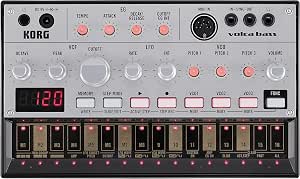
Examples from this category, each with its own review here
3 options shown here, $149.10 to $334.68, each with its own full review behind its name.
Explore the best digital synthesizer options for modern production workflows.


What Happens If You Go Under or Overbuy?
Underbuying cuts phrase length first. A 12-step sequencer can still make music, but it forces you into shorter loops, more repeats, or more pattern switching to finish a phrase.
You might also prefer to view the best synthesizer for making electronic music.
That matters most when you want a bass line, a chord stab pattern, or a drum-like pulse to run without constant attention. If the sequence is too short, you spend time managing repetition instead of shaping the music.
For those seeking a classic sound, view our guide to the best analog synthesizer.
Overbuying is also a real cost. A 64-step or 256-step sequencer gives more room, but that extra space is wasted if you only write 8-step or 16-step patterns and never extend them.
Budget-conscious creators can find the best synthesizer for beginners under $500 here.
Longer step counts can also slow decisions. If you mainly build compact loops, a large sequencer adds navigation and editing burden without giving you a musical gain.
For creators on the move, see our roundup of the best portable synthesizer models.
The Mistake Buyers Make With Sequencer Steps
The usual mistake is chasing a high step count instead of matching the pattern length you actually write. Sequencer steps measure positions in a pattern, so the real question is whether your phrases need 8, 16, 32, or more steps.
If you are touring, find the best synthesizer for live performance under $500.
For a compact electronic groove, 16 steps often matters more than a much larger number. If your music needs one-bar riffs and quick changes, prioritise usable length over a bigger figure that sits unused.
Protect your investment by looking at the synthesizer warranties to check before you buy.
Here is a simple check: count the longest phrase you expect to program without chaining. If that phrase is 16 steps, anything at or above 16 steps is enough; if it is 32 steps, start there instead.
Newcomers can start with our guide explaining what a synthesizer is.
Do you mainly write short loops or longer evolving parts? If the answer is short loops, 8 to 16 steps is the right working range.
Ensure your gear meets safety codes by viewing the certifications and safety standards for synthesizers.
How Sequencer Steps Interact With Other Limits
Sequencer steps stop mattering once another spec becomes the bottleneck. A 32-step sequence is not useful if the synth is monophonic and you need chords, because note count then limits the music before step count does.
You can also view our full spec breakdown of the MODEL D.
Patch memory is another hard limit. If a synth cannot recall sounds reliably, a long sequence does not solve the problem of returning to the same setup later.
For a unique wavetable experience, see our full review of the MicroFreak.
MIDI DIN and USB-MIDI matter when you need sync or computer control. A long pattern length helps only if the instrument can stay in time with the rest of your setup.
Check out our full review of the Volca Nubass for more details.
Polyphony also changes the value of extra steps. If you are programming pads or sustained harmony, voice count decides whether the pattern can actually sound the way you wrote it.
Get more information by viewing our full review of the TD-3-BK.
In a simple live rig, 16 steps is often enough when the instrument has MIDI DIN, USB-MIDI, patch memory, and at least 4 voices. If one of those is missing, more steps will not fix the missing function.
The other synth guides we have published
Top Discounts is reader-supported: some links on this page are affiliate links, and as an Amazon Associate Top Discounts earns from qualifying purchases at no extra cost to you. Learn more.