Synthesizer polyphony should be at least 4 voices for most practical buying decisions. If you need chords, sustained pads, or stage recall, 4 voices is the floor to use; below that, monophonic behavior blocks harmony. Decide how many notes you need sounding together in your own parts, then compare that need with 4 voices.
If you need heavy low-end, see our comparison of the best synthesizer for bass.
Recommended Synthesizer Polyphony Voices by Use Case
| use case | recommended Polyphony voices | why this number |
|---|---|---|
| play three-note chords and sustained pads without note dropouts | at least 4 voices | Three notes need three voices, and 4 leaves one extra voice for release overlap or a held bass note. |
| store a few sounds and recall them on stage | at least 4 voices | Stage recall needs enough voices for left-hand support, right-hand melody, and a sustained tail. |
| make classic subtractive leads and pads for electronic tracks | at least 4 voices | Lead lines need one voice, while pads and stacked intervals need several; 4 voices covers both basic jobs. |
| play four-note chords with sustain and pedal overlap | 6 to 8 voices | Four held notes plus release time and pedal overlap make 4 voices tight, so 6 to 8 gives working room. |
| layer left-hand bass with two-handed chord work | 8 voices or more | Two hands can consume 5 or more voices quickly, especially when notes ring together across phrases. |
| run dense arpeggios with long releases | 8 to 16 voices | Fast patterns recycle voices, but long release times keep them occupied; 8 to 16 reduces note stealing. |
Synthesizers we have reviewed in detail
From $149.10 to $315.76: 3 of the 15 in this category we have reviewed in full.
You can also find the best digital synthesizer for your needs in our detailed buyer’s guide.


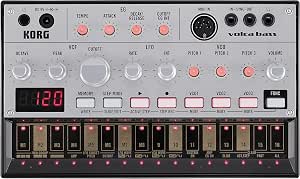
What happens if you go under or overbuy voices?
Underbuying voices costs you notes. A 2-voice or 3-voice synth cannot hold a normal three-note chord cleanly, and sustained parts will steal voices from newer notes. That matters most in pads, left-hand accompaniment, and any part where release time overlaps the next phrase.
If you prefer a vintage workflow, explore our breakdown of the best analog synthesizer.
New users on a budget can find the best synthesizer for beginners under $500.
Overbuying is real cost too. The listings we screened state polyphony from 2 to 256 voices, with a median of 16 voices, and many practical parts do not need that much headroom. If your writing stays in the 4- to 8-voice range, a much larger figure adds unused capacity instead of a better result.
For those on the move, compare the best portable synthesizer models on our roundup page.
When 4 voices are enough and when to go higher
Which side matters more for you? If your parts are mostly single-line leads, 4 voices is enough. If you stack chords, sustain, and pedal work, move to 8 voices or more, because the extra voices protect the notes you already asked the synth to keep sounding.
Musicians needing reliability on stage should examine the best synthesizer for live performance under $500.
Beyond voice counts, you should evaluate the preset memory for synthesizers to ensure you have enough storage.
The mistake most buyers make with voices
The mistake most buyers make is treating polyphony voices as the main quality measure. It is only a capacity limit, not a sound-shaping spec. A synth with 16 voices is not automatically more useful than one with 8 if your parts never use more than 4 at a time.
To manage your budget, compare what synthesizers cost across different price tiers.
Why note count matters more than raw voice count
What should you optimise instead? Match voices to the actual note count in your parts, then spend attention on the other deciding specs that shape workflow. If you need chords and recall, 4 voices is the minimum threshold; after that, the real question becomes whether the keyboard, sequencer, and MIDI support fit your job.
Selecting the right interface is vital, so learn how to choose your keys for synthesizers.
How voices interact with other deciding specs
Polyphony voices stops mattering when another spec becomes the real limit.
Protecting your investment is important; review the synthesizer warranties before making a purchase.
Safety is a priority, so verify the certifications and safety standards for synthesizers before buying.
How keyboard size affects the value of extra voices
Keys can limit the value of voices. A 25-key layout can make two-handed playing awkward even when the voice count is generous, while a fuller keyboard lets you use those voices in real parts. For players who need both hands, key count and voices should rise together.
Understanding the underlying technology is helpful, so view the types of synthesizers, explained.
Why sequencer length still needs enough voices
Sequencer steps matter when you build longer patterns. A 16-step sequencer is the minimum pattern length most buyers expect for hands-on riff building, but a longer pattern still needs enough voices to keep sustained notes from cutting off early. If the pattern is short and the voices are high, the extra capacity may sit idle.
For a portable keyboard option, view our full review of the Volca Keys.
If you prefer FM synthesis, read our full review of the Volca FM.
How MIDI connectivity matters more than voice count
MIDI DIN and USB-MIDI matter when the synth has to talk to other gear or a computer. MIDI DIN is the common hardware sync standard, and USB-MIDI is the direct computer connection standard. If your setup depends on either one, a high voice count does not replace missing connectivity.
This specific entry-level model is available in our full review of the MX49BK.
Why patch memory matters alongside polyphony voices
Polyphony voices also interacts with patch memory. A synth can have enough voices for chords and still be awkward if it cannot recall sounds reliably. For stage use, 4 voices and patch memory together are more useful than a large voice count without recall.
For a compact mono-synth, see our full review of the monologue.
Browse our other synth pages
Top Discounts is reader-supported: some links on this page are affiliate links, and as an Amazon Associate Top Discounts earns from qualifying purchases at no extra cost to you. Learn more.