Our Top 3 Picks for Beginners Under $500
The best synthesizer for beginners under $500 is the Roland AIRA Compact S-1 because its four-voice polyphony supports chords for new players.
If you read one thing on this page, read these 3.
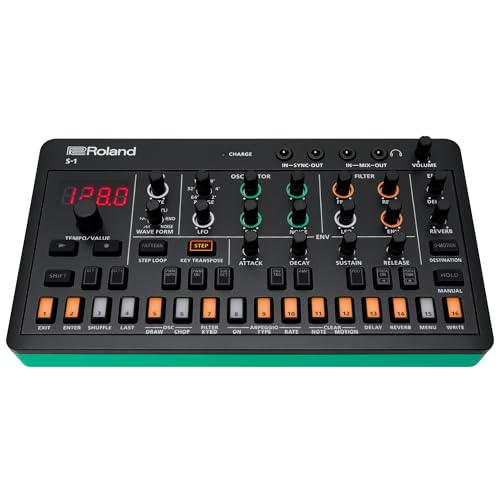
#1 – Roland AIRA Compact S-1
Best for: you want the lowest-cost four-voice option among these picks and prefer a compact hands-on layout.
Why the Roland AIRA Compact S-1 is our #1 pick
- Listed at $269.99 in November 2026 – mid-range among those compared; the price moves, so check it
- 4.5 rating from 190 ratings
Polyphony voices: four-voice
To put that polyphony voices in context, pick #3 states three-voice polyphony.

#2 – Arturia MicroFreak
Best for: you want 25 keys and a wider control set for a first synth under $500.
Why the Arturia MicroFreak is our #2 pick
- Listed at $334.42 in November 2026 – premium among those compared; the price moves, so check it
- 4.5 rating from 803 ratings
Keys: 25-key
For comparison on polyphony voices, pick #1 states four-voice and pick #3 states three-voice polyphony.
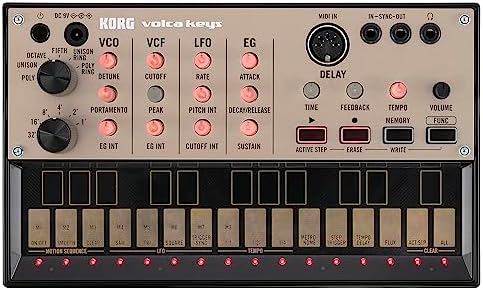
#3 – Korg Volca Keys
Best for: you want a budget starter synth with 16-step pattern building and touch-sensitive keys.
Why the Korg Volca Keys is our #3 pick
- Listed at $119 in November 2026 – entry among those compared; the price moves, so check it
- 4.5 rating from 648 ratings
Polyphony voices: three-voice polyphony · Sequencer steps: 16-step sequencer
Against the other picks on polyphony voices, pick #1 states four-voice.
For a deeper look at the hardware, read our full review of the microKORG.
How Top Discounts picked: we started from the 200 most-reviewed synthesizer listings in our retail dataset, removed duplicates, accessories and off-category products, and 84 qualified. The picks on this page were selected from those 84 candidates against this topic’s requirements. The order of the picks reflects fit to this topic; each shows its rating and the number of ratings behind it, so you can weigh how much to trust it. Specifications come from manufacturer listings and ratings from verified Amazon buyer reviews (data checked November 2026).
Our Verdict and How We Chose
If your first synth is going on a desk beside a laptop, the size of the controls matters as much as the sound.
Roland AIRA Compact S-1 fits that setup because its four-voice polyphony lets you handle beginner chords without a full-size board. Choose the Arturia MicroFreak instead if you want 25 keys and a wider modulation matrix. Choose the Korg Volca Keys if you want a battery option and a built-in speaker for quick sketching. We screened 84 synthesizers at Top Discounts and compared 10 in this page’s table for first-time buyers under $500. The shortlist runs from $119 to $334.42, and the median price of the 10 products in our comparison is $292.88.
The S-1 keeps the price around $269.99, which leaves room for cables or a small controller. The MicroFreak is the most feature-dense of the three, with 17 paraphonic oscillator modes and step-based note editing. The Volca Keys stays at $119 and states audio input, so it suits players who want to fold another source into a simple setup.
Learn about the article scope to see which brands and price points are included.
Consult the buying guide for tips on choosing the right features for your style.
Use the audience checklist to find which model matches your specific musical goals.
Many producers also appreciate our detailed breakdown of the MiniNova.
Synthesizers for Beginners Under $500 in Brief, Before You Read the Rest
- Top pick: Roland AIRA Compact S-1 at $269.99 (Polyphony voices: four-voice).
- Also picked: Arturia MicroFreak at $334.42; Korg Volca Keys at $119.
- We compared 10 Synthesizers, from $119 to $335.86, median $292.88.
- Best buyer rating in the comparison: Arturia MiniFreak at 4.8/5 from 128 ratings.
- Cheapest in the comparison that can build 16-step bass riffs and short patterns by hand: Korg Volca Keys at $119 (16 steps).
Synthesizers for Beginners Under $500 Compared Side by Side
| Product | Price | Rating | Polyphony voices |
|---|---|---|---|
| Roland AIRA Compact S-1 | $269.99 | 4.5 (190 ratings) | four-voice |
| Arturia MicroFreak | $334.42 | 4.5 (803 ratings) | Not stated |
| Korg Volca Keys | $119 | 4.5 (648 ratings) | three-voice polyphony |
| Korg microKORG | $335.86 | 4.5 (461 ratings) | 4-voice polyphony |
| Korg monologue MONOLOGUEBK | $315.76 | 4.7 (326 ratings) | Not stated |
| Novation MiniNova AMS-MININOVA | $334.68 | 4.6 (272 ratings) | 18 voices |
| Arturia MiniFreak | $334.27 | 4.8 (128 ratings) | 6-Voice |
| Behringer TD-3-MO-SR Modded Out Analog Bass Line Synthesizer | $199 | 4.6 (113 ratings) | Not stated |
| Korg Volca Kick/Bass | $128.99 | 4.6 (106 ratings) | Not stated |
| Behringer TD-3-BK | $149 | 4.5 (382 ratings) | 16-Voice Poly Chain |
Prices are approximate and move frequently – check the current price before deciding. “Not stated” means the manufacturer listing does not give that figure – we do not estimate it.
Korg Volca Keys fits this topic best because it pairs a 16-step sequencer with 27 touch-sensitive keys, which suits beginner pattern making and learning.
Each Pick for Beginners Under $500, Reviewed in Detail
The 3 picks below are reviewed in the same order as the cards above.
Roland AIRA Compact S-1
Its four voices matter because chords and pads need simultaneous notes, while the 10.25 x 6.6 x 3.5 inch size keeps the format small enough for a simple desk setup.
What we like: Four-voice polyphony gives you room for chords, and the chord mode adds another way to build harmony without a bigger keyboard. The oscillator set includes square, sawtooth, sub, and noise, so the S-1 covers a useful range for learning subtractive synth basics. The $269.99 price also keeps it inside this page’s budget target.
Keep in mind: The S-1 does not state any key count, so it is not the pick if you want full-size playing surfaces. It is better for a compact workflow than for players who want a traditional keyboard layout.
Arturia MicroFreak
MicroFreak is the strongest starter keyboard synth here if you want a 25-key layout and a wider sound-design range. Its 25-key PCB keyboard gives you a playable surface, while the 5×7 modulation matrix lets you route control in ways that suit a learner who wants room to grow.
What we like: The 25-key format is the clearest middle ground between tiny touch strips and a larger keyboard. MicroFreak also states 17 paraphonic oscillator modes, seven Arturia engines, seven Mutable Instruments modes, and three Noise Engineering modes, which gives you a broad set of sound sources to explore. Pressure and aftertouch detection on each note adds another layer of control, and the $334.42 price still stays under the budget cap.
Keep in mind: The keybed uses no moving parts, so it is not the right choice if you want a conventional piano-style feel. If you prefer simple chord playing over deeper modulation and step-based editing, the extra options may be more than you need.
Korg Volca Keys
Volca Keys is the low-cost groovebox-style synth in this group, and its 16-step sequencer makes it the easiest fit for short riffs and pattern building. The 27 touch-sensitive keys keep the playing surface simple, and the battery-operated power option helps if you want a portable starter synth.
What we like: The 16-step sequencer is the key feature for beginners who want hands-on riff building, and the motion sequencing adds movement without extra gear. Three-voice polyphony is enough for compact chords and simple harmony, while the built-in speaker and audio input add convenience that the other picks do not state. At around $119, it is also the least expensive option here.
Keep in mind: Three voices limit how dense your chords can be, so this is not the right pick if you want fuller polyphonic parts. If you want a larger keyboard or deeper modulation tools, the Volca Keys is the more stripped-down choice.
If these options aren’t right, explore the alternatives to a standard synthesizer.
The Specs That Decide a Synth for Beginners Under $500
Easy Knob Layout For First-Time Use
Look for an easy knob layout for first-time use when you want immediate control over sound shaping. The Roland AIRA Compact S-1 states a hands-on panel, and Korg Volca Keys lists knobs for real-time control, so both favor direct adjustment over menu diving. The S-1 also names oscillator drawing, oscillator chop, and riser tools, which gives you more front-panel targets to learn. The Korg MS-20 is known for patching behavior, while these picks keep the control path simpler for a first synth under $500.
Polyphony For Chords And Layered Parts
Prioritize polyphony for chords and layered parts if you want notes to overlap cleanly. Polyphony is the number of notes a synth can sound at once, so four voices support basic chords, while three voices ask you to keep parts leaner. The S-1 states four-voice polyphony, and Korg Volca Keys states three-voice polyphony; Arturia MicroFreak does not state a voice count in the data here. Roland JUNO-60 is the classic subtractive benchmark here, and the S-1’s four voices make it the closer match among these beginner picks.
Built-In Sequencer For Quick Pattern Making
Choose a built-in sequencer for quick pattern making if you want to sketch riffs without external gear. Sequencer steps measure how many positions a pattern can hold, and 16 steps remain the practical floor for hands-on riff building. Korg Volca Keys states a 16-step sequencer, so it gives you that pattern length in a low-cost format. The sequence work is what separates the field here, because the Volca Keys combines that length with motion sequencing and knobs for real-time control.
Keyboard Or Pad Feel For Learning
Pick keyboard or pad feel for learning based on how many physical notes you want under your fingers. Twenty-five keys suit compact practice and simple two-handed work better than a touch surface, while 27 keys give a little more span. Arturia MicroFreak states a 25-key PCB with pressure and aftertouch detection on each note, and Korg Volca Keys states 27 touch-sensitive keys. Aftertouch means extra pressure changes expression after the note starts, so the MicroFreak gives you more expressive control than a plain keybed.
Headphone Output For Quiet Practice
Check headphone output for quiet practice before you decide on a starter synth. None of the three picks here states a headphone output, so the data does not answer this question for them. Korg Volca Keys does state a built-in speaker, which helps practice away from monitors, and it also states an audio input for external sources. If quiet practice matters most, you need a listing that names the headphone output directly.
The Jobs Buyers Ask About, Checked Against Each Pick
Each row is a job this page’s buyers ask about, worked out from each pick’s listed polyphony voices and sequencer steps and a typical need for the job.
| What you want to do | What it takes | How each pick does |
|---|---|---|
| Play three-note chords and sustained pads without note dropouts | at least 4 voices | Roland AIRA Compact S-1: not stated; Arturia MicroFreak: not stated; Korg Volca Keys: not stated |
| Build 16-step bass riffs and short patterns by hand | at least 16 steps | Roland AIRA Compact S-1: not stated; Arturia MicroFreak: not stated; Korg Volca Keys: yes (16 steps) |
| Store a few sounds and recall them on stage | at least 4 voices | Roland AIRA Compact S-1: not stated; Arturia MicroFreak: not stated; Korg Volca Keys: not stated |
The needs are typical figures for each job, not manufacturer claims, and each pick’s result is worked out from its listed specifications. Your own job’s figure is the one that decides.
Who Buys Synthesizers, and What It Really Costs
Who buys a synthesizer, and what each one needs
- Bedroom producers — at least 4 voices for chords and pads
- Singer-songwriters — polyphony, note count for holding accompaniment while playing melody
- Electronic music students — 16-step sequencer for hands-on riff building
- Home studio beginners — MIDI DIN ports, round MIDI sockets for syncing with other gear
- Keyboard learners — full-size keys for practicing technique instead of mini keys
What a synth really costs, and where to buy one
What to budget for on top of the synth
- Keyboard stand — keeps the instrument at a playable height
- Sustain pedal — lets held notes ring naturally
- Headphones — for silent practice and late-night use
- MIDI cable — connects to other hardware through MIDI DIN, round MIDI sockets
- Power strip — adds outlets for the synth and any small setup
What you can leave out of the budget
- External audio interface — not needed if you are only using the synth on its own
- Studio monitors — you can practice through headphones first
- MIDI splitter — unnecessary unless you are routing one MIDI DIN signal to several devices
- Patch cables — skip them if the synth does not use patching behavior
Where this kind of product is normally sold
- Music instrument stores — hands-on demos, staff setup help, and straightforward return handling
- Large online marketplaces — broad price comparison and buyer reviews, with return windows that vary by seller
- Used gear shops — lower entry prices and local inspection, with warranty coverage that depends on the shop
- Big-box electronics retailers — simple checkout and easy returns, but usually a narrower synth selection
Protect your investment by reviewing standard synthesizer warranties before you buy.
What These Synths Need, and What to Check on Arrival
What you need before these synths will work
Power is the first requirement here, because the Korg Volca Keys states a battery-powered option and an AC adapter option, while the other two do not state a power source. You also need a way to hear them, since none of these three states built-in speakers.
- Arturia MicroFreak needs a keyboard-style playing surface built in: it states 25 keys, so you do not need an external controller to play notes.
- Korg Volca Keys works without a separate keyboard, because it states 27 touch-sensitive keys and a built-in speaker is not listed.
- Roland AIRA Compact S-1 needs some other monitoring setup, because it states no built-in speaker and no battery option in the data here.
What to check on arrival after you order a synth
Seller and country can change what is covered, so the first check is physical condition and the exact contents you received.
- Confirm the power method in the box matches the model you ordered. The Volca Keys is the only one here that states an AC adapter option, so it is the one most likely to expose a missing-power problem at unpacking.
- Confirm the keys or touch surface work as expected. The MicroFreak uses 25-key PCB construction with no moving parts, and the Volca Keys uses 27 touch-sensitive keys, so either one needs a quick note-by-note check.
- Confirm the controls respond cleanly. The S-1 states a hands-on panel, and the Volca Keys states knobs for real-time control, so any stuck or dead control matters immediately.
- Confirm the audio path you planned to use is actually available. The Volca Keys states an audio input, but external audio processing is not stated for any of these picks, so do not assume outside sound can run through the signal path.
On the day it arrives, power it up and play every key, pad, and control once while you can still return it.
Check out the FAQ to see answers to common beginner questions.
Review the minimum requirements to ensure the hardware meets your technical needs.
View the comparison table to see the specs of each model side by side.
Take a closer look at the Korg MS20 Mini performance analysis before you decide.
Buying Questions About Synthesizers for Beginners Under $500, Answered
What should you expect for under $500: keys, sound engine, effects, and controls?
Under $500, the beginner synths here split between compact control layouts, tactile keys, and built-in pattern tools. The Roland AIRA Compact S-1 states four-voice polyphony and a hands-on panel, while the Arturia MicroFreak gives you 25 keys, a resonant analog filter, and 4 dedicated knobs for the Digital Oscillator section.
Does it have USB-MIDI or standard MIDI so I can connect it to a computer or app later?
No, the three picks here do not all state USB-MIDI or MIDI DIN. The category standard for direct computer connection is USB-MIDI, and the standard hardware sync format is MIDI DIN, but only the broader comparison data states USB-MIDI for one other model outside these three.
What beginner mistakes should I avoid, like buying a synth that needs extra gear or has a confusing interface?
Beginner mistakes usually start with skipping the control layout and the setup needs. The Korg Volca Keys runs on an AC adapter or battery power and adds a built-in speaker, while the MicroFreak uses a 25-key PCB layout with no moving parts and pressure detection on each note.
Which starter synth under $500 gives you the most hands-on control?
If you want the most hands-on control, the Korg Volca Keys is the clearest fit at $119. It combines 16 sequencer steps, 27 touch-sensitive keys, motion sequencing, and knobs for real-time control.
See our top picks for a quick glance at the best-rated options.
Find the setup and warranty notes for information on installation and manufacturer support.
Explore the detailed reviews for an in-depth look at each individual synthesizer.
If you need a portable setup, see the best synthesizer for live performance under $500.
You can also explore the best digital synthesizer for general use to see how they compare.
Who Should Skip These Synths
If you need more than four voices for chords or pads, these three picks are the wrong tool. A setup that depends on MIDI DIN or USB-MIDI for clock and control also needs a different shortlist, because those connections are not stated here.
For that use case, move to a polyphonic synth with more voice count and stated MIDI sync support. If your work centers on layered harmony or DAW-linked sequencing, start with a broader synth guide instead of this beginner-focused under-$500 group.
The other synth guides we have published
Top Discounts is reader-supported: some links on this page are affiliate links, and as an Amazon Associate Top Discounts earns from qualifying purchases at no extra cost to you. Learn more.