A 12 string guitar scale length is the vibrating string length from nut to bridge, measured in in. The right value depends on your reach, your fretting comfort, and how much string tension you want to manage. Measure the scale length you can handle before you order, then compare it with the values you already play comfortably.
If you are just starting out, view our top picks for beginners and intermediate players to find your first instrument.
Which Scale Length Fits Which Buyer?
| if this is you | the scale length that suits you | why |
|---|---|---|
| You want the easiest fretting feel and shorter left-hand stretches. | 23.5 in to 24 in | Shorter scale length lowers string tension and usually feels less demanding under the fingers. |
| You already play short-scale acoustics and want a familiar layout. | About 24 in | That length sits in the short-scale format many players already know from smaller acoustics. |
| You want a balanced middle ground for a 12 string guitar. | 24.5 in to 25 in | That span covers the median 25 in point found in the listings we screened, so it is the most common middle zone. |
| You prefer firmer string feel and more resistance under the picking hand. | 25 in to 25.8 in | Longer scale length raises tension, which suits players who want a tighter response. |
| You move between standard and alternate tunings and want extra room for setup changes. | 24.5 in to 25.8 in | Longer values give more string pull, which can help keep the setup stable when tuning changes. |
12 String Guitars we have reviewed in detail
Each of the 3 shown here has its own full review on this site; they run from $194.45 to $259.99.
New players can see our recommendations for beginner 12 string guitars to find a manageable entry point.
Mature musicians can compare the best 12 string guitars for adults to find a high-quality instrument.
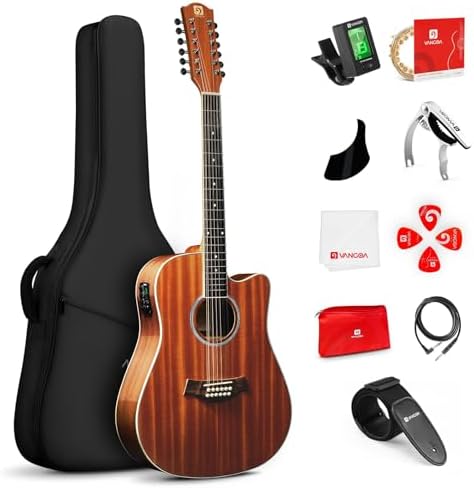


How do you measure your own scale length before ordering?
Many listings state it in the specs, and some print it near the neck joint or product dimensions. If your current guitar already feels right, copy that number first. If you are replacing a guitar you already own, the scale length written on the spec card or inside the instrument is the number to match.
For those focused on rhythm, discover the best 12 string guitar for strumming songs to enhance your acoustic sound.
You can find the best 12 string guitar for home recording to ensure your tracks sound professional.
A 12 string guitar with a scale length you already know saves you from guessing about tension and reach. That measurement gives the value that matters for feel, while body size tells you something else.
For versatile performance, explore our comparison of acoustic electric 12 string guitars to find the best electronics.
Left-handed players should browse our curated list of left-handed 12 string guitars for a comfortable playing experience.
What goes wrong when the scale length is too short or too long?
Choosing the wrong scale length costs time, because you may return the guitar or live with a setup that does not suit your fretting hand. A short value reduces tension, so chords can feel easier but the strings may feel looser than you want. A long value increases tension, so the left hand works harder and stretches can feel less forgiving.
Parents can find the best 12 string guitar for teens to help a younger musician get started.
Understanding the layout is easier if you learn how to choose your string count for the best resonance.
Long scale changes finger effort on a 12 string guitar
Imagine a buyer who wants a 12 string guitar for regular chord work and picks a long scale because it sounds more stable. The first thing that shows up is not tone talk; it is finger effort, especially on barre shapes and wider grips. The reverse mistake shows up as a looser feel that some players read as slackness, especially if they expected firmer resistance.
To ensure proper signal flow, research the best electronics output for 12 string guitars before buying.
You can view the different string tuning formats to understand how the notes are arranged.
What should you do if you fall between two scale lengths?
If you fall between two scale lengths, choose the shorter one when comfort matters more than resistance. Choose the longer one when you want firmer string feel and can handle extra left-hand effort. That decision matters most on a 12 string guitar, because doubled courses already ask more of your fretting hand than a six-string acoustic.
Understanding the construction is easy when you see the different types of 12 string guitars explained in detail.
Beginners can learn the basics of how 12 string guitars work to understand the unique physics of the instrument.
Matching scale length to your usual guitar feel
When the choice sits between 24 in and 25 in, the safer move is to start with the value that matches the guitar you already play most often. If you switch from a short-scale acoustic, stay near that feel. If you already live with a longer neck, stay in that range instead of forcing a change you do not need.
If you want a similar sound without the extra strings, explore the various 12 string guitar alternatives available.
Consider this reliable option by reading our full review of the VGE12-2L.
Return policy matters when choosing a 12 string guitar scale
Returns and sizing policy matter here once, because a wrong scale-length choice can send you back to the seller. If the shop allows returns, you have room to compare the feel against your own playing. If returns are limited, match the number you already know rather than gambling on a different reach.
For a classic dreadnought feel, see our full review of the RA-090.
This high-end model is worth looking at in our full review of the GA41PS-RDS.
Every 12 stringer guide in this category
Top Discounts is reader-supported: some links on this page are affiliate links, and as an Amazon Associate Top Discounts earns from qualifying purchases at no extra cost to you. Learn more.