String count is the number of strings on a 12 string guitar, and it is the first choice that shapes how much doubling the instrument asks from you. The right count depends on your fretting strength, your tolerance for tighter setup, and whether you want a fuller doubled-course feel or a lighter playing load. Check how many strings you can manage cleanly before you order.
Which string count suits you?
| if this is you | the string count that suits you | why |
|---|---|---|
| You want the standard 12-string layout and already handle doubled courses comfortably. | 12 strings | That count gives the full paired-course format most listings state for this category. |
| You are moving up from a six-string and want the same course count as a full 12 stringer. | 12 strings | The doubled setup is the point of the instrument, and fewer strings change that character. |
| You need less left-hand load and want a simpler fretboard feel. | 6 strings | Some listings state six strings, which cuts the doubled-course work entirely. |
| You are unsure whether the extra pairs will stay manageable for your current technique. | Start with 6 to 8 strings | That range appears in the listings we screened and gives a lighter step before a full 12-string setup. |
| You want the category’s full sound and do not mind the extra setup load. | 12 strings | The median listing value is 12 strings, so that is the central configuration in the set we reviewed. |
| You prefer the least complicated option for a first move into this category. | 6 strings | It is the lowest stated count in the listings we screened, so it asks least from your fretting hand. |
Products in this category with a full review here
3 options shown here, $194.45 to $259.99, each with its own full review behind its name.

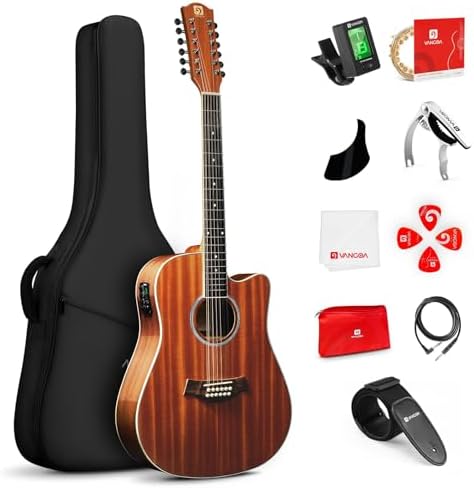

How do you check your own string count before ordering?
Count the strings on your current instrument from the nut to the bridge, not the courses you think you hear. A 12 string guitar is like a bicycle with a second chain: the extra parts change the load, even though the frame is still the same kind of machine. The number is usually written in the title, the short product description, or the specs line, and you should compare that figure with the count you can already play cleanly.
If you are reading a listing, look for the exact phrase “string count” or “number of strings.” Some sellers write only “6 strings” or “12 strings,” which is enough if the number is stated plainly. If the number is missing, treat it as unstated and do not guess from the body shape or the tuning note.
Check out our full FS830 review for a detailed spec breakdown.
Choosing a 12 string count your fretting hand can handle
For an upgrader, the useful question is not what the instrument can do in theory. It is whether your left hand can handle the doubled courses without forcing awkward chord shapes. A player who already manages a 12-string setup should keep that count; a player who still fights clean fretting often does better with fewer strings.
What goes wrong when the string count is too high or too low?
Too many strings for your current level show up as slow chord changes, muted notes, and more pressure in the fretting hand. The mistake costs time, because you spend practice hours fighting the setup instead of playing music. It can also push you toward a return if the instrument no longer matches the way you actually play.
How a lower count can miss the fuller 12-string sound
Too few strings can leave you with a setup that feels too plain if you wanted the doubled-course sound. The result is not failure; it is a mismatch between the instrument and the sound you meant to buy. You keep the easier load, but you lose the fuller 12-string character that drew you to the category.
View our data on how the AW54LOPN performs in our full review.
Matching string count to the job your hands can do
Think of it like choosing a wrench size before a job. The wrong size still turns metal, but it slips, slows you down, and makes the work harder than it needs to be. String count works the same way: the count must match the job your hands can actually do.
What should you do when you fall between two string counts?
When you fall between two string counts, choose the lower count if your priority is comfort, clean fretting, or a first step into the category. Choose the higher count only if you already know you want the doubled-course sound and can handle the extra left-hand work. That rule matters most when the difference is between 6 and 12 strings, because the jump changes the whole playing load.
Choosing between lighter count and full 12-string sound
A buyer who sits on the fence should start from the way the instrument will be used on ordinary days, not on the best day. If you split your time between practice and long playing sessions, the lighter count usually stays more usable. If you already play a 12-string style without strain, the full count keeps the sound you are after.
See our full CD-60 Dreadnought review for a complete spec analysis.
Returns and sizing policy matter here if the seller allows them, because the wrong count is a fit problem, not a finish problem. The first order may be the only way to confirm that your hands and your setup expectations match the count you chose.
Picking the count that leaves the least playing friction
One player starts by checking the number written in the listing, then compares it with the count they already play comfortably. If the number is 12 and their fretting hand already handles doubled courses, they keep that route. If the number is 12 but they still struggle with clean chords, they step back to a lower count. The choice ends with the count that leaves the least friction in actual playing.
Browse our other 12 stringer pages
- The 12 String Guitars That Work Best for Beginners and Intermediate Players
- Which 12 String Guitar Is Best for Strumming Songs?
- Best 12 String Guitar for Home Recording
- The 12 String Guitars That Work Best for Beginners
- Which Acoustic Electric 12 String Guitar Is Best?
- Best Left Handed 12 String Guitar
Top Discounts is reader-supported: some links on this page are affiliate links, and as an Amazon Associate Top Discounts earns from qualifying purchases at no extra cost to you. Learn more.