Electronic drum kits usually land in the middle two price bands, where the median price runs from $199.98 to $329.99. As price rises, the biggest change is the built-in sound library, which moves from 198 sounds to 447 sounds and then 709 sounds.
Electronic Drum Kit Price Levels at a Glance
| Price level | Price range | Products | Median snare pad size | Median number of drum pads | Median rating |
|---|---|---|---|---|---|
| Entry level | $139.18 to $181.99 | 16 | 7in | 4 count | 4.5 |
| Lower mid-range | $183.99 to $219.99 | 17 | 8in | 4 count | 4.5 |
| Upper mid-range | $229.99 to $399.99 | 16 | 8in | 5 count | 4.3 |
| Top end | $409.99 to $7039.99 | 17 | 10in | 5 count | 4.3 |
Products in this category with a full review here
From $189.99 to $239.99: 3 of the 15 in this category we have reviewed in full.


What Entry Level Electronic Drum Kits Get You
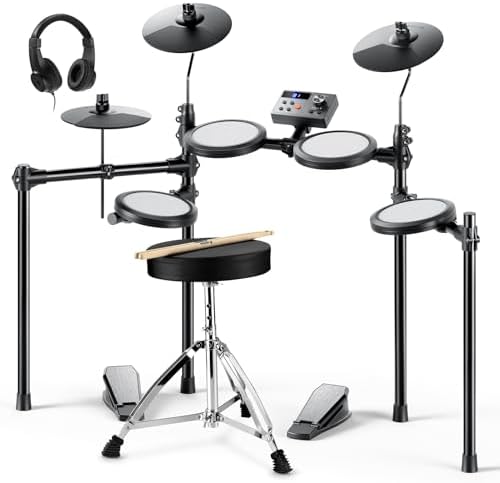
Entry level kits sit at a median price of $169.88 and usually bring 7-inch snare pads, four drum pads, three cymbals, and 150 built-in sounds. That is the tier for a first setup, quiet practice, or a small space where you care more about getting started than about larger playing surfaces.
A 7-inch snare pad gives a smaller target than the 10-inch snare pad reference figure that marks a more realistic stick area in this category. At this level, none of the listings that state snare size reach that figure, so the tradeoff is clear: lower cost, but less room for rim-zone control.
If your own space is tight and you only need basic kit coverage, this is the level to check first. A four-pad layout and three cymbals cover a simple setup, but they give up the extra pad that appears more often in the next band.
New players should start by viewing our list of best electronic drum kit for beginners.
What Lower Mid-range Kits Add
Lower mid-range kits center on a $199.98 median and usually move to 8-inch snare pads, four drum pads, three cymbals, and 198 sounds. This is the first band where the sound count starts to feel less sparse, while the pad count stays the same as entry level.
That makes this tier the first place where the category starts to reach the more realistic snare size buyers often want, even though most options still stay at 8 inches.
Choose this band if you want a little more headroom in the module without paying for a larger, more complex kit. A small home practice corner is a good example: you gain more sounds, but not more drum positions.
Against the next level up, the main thing you give up is pad count. The upper mid-range band moves to a median of five drum pads, so the lower mid-range buyer who wants a fuller layout has to accept a four-pad ceiling here.
Students can see the best electronic drum kit for learning drums to accelerate their progress.
What Upper Mid-range Kits Change
Upper mid-range kits move to a $329.99 median, and the median layout changes to five drum pads, three cymbals, 8-inch snare pads, and 447 sounds. That is the point where the kit starts to feel more complete in count, even though the snare size still usually stays at 8 inches.
Five drum pads matter because this tier adds one more striking surface than the two lower bands. If you want a separate tom or auxiliary pad without jumping to the highest price group, this is the first band that makes that possible in the median figures.
This level suits you if you want more part separation in the layout and a larger sound set without paying top-end prices. A five-pad arrangement helps when you want a more complete practice setup for grooves and fills, but not a flagship module.
What you give up against the next level is mostly snare size and sound count. The top band centers on a 10-inch snare and 709 sounds, so the upper mid-range buyer who stays here accepts a smaller target and a smaller library.
For a budget-friendly entry point, view our full review of the PTED06.
What Top End Kits Add
Top end kits sit at a median price of $659.99 and usually include a 10-inch snare pad, five drum pads, three cymbals, and 709 sounds. This is the band for buyers who want the largest snare surface and the deepest built-in sound set in the figures here.
The 10-inch snare is the key change, because that size is the reference figure that marks a more realistic stick target and rim-zone control in this category. Seven of the nine listings that state snare size in this band are at or above that figure, so this is where the category most often gives you the larger playing surface.
This level suits you if the snare size matters as much as the sound count. A player building a home practice rig for longer sessions will usually care more about the larger striking area and the bigger library than about saving a few hundred dollars.
Against the band below, the main gain is not another pad or another cymbal. It is the jump from 447 sounds to 709 sounds, plus the move from an 8-inch median snare to 10 inches.
Consider the compact design by looking at our full review of the DED-200.
Where Higher Prices Stop Buying More
Higher prices stop buying as much extra layout once you reach the upper mid-range. The median drum pad count stays at five in both the upper mid-range and top end, and the median cymbal count stays at three in every band.
The clearest flattening shows up in the pad counts, not the sound libraries. Entry level and lower mid-range both sit at four drum pads, then upper mid-range and top end both sit at five, so the extra money above the middle bands does not keep adding more striking zones.
Sound libraries keep rising, though the gains are uneven. The step from 150 sounds to 198 sounds is modest, the move to 447 sounds is much larger, and the final jump to 709 sounds is larger still.
Price per unit of snare pad size also climbs sharply, from $22.50 in entry level to $24.94, then $38.00, then $67.50. That pattern says the highest band charges much more for the larger snare and the bigger library, not for a fuller pad or cymbal count.
Examine the features of the mid-range model in our full review of the EDS750.
What To Budget Beyond The Kit
Beyond the kit itself, you need to budget for a drum throne, headphones, and drum sticks. A drum throne supports proper playing posture, headphones let you practice quietly, and drum sticks are the primary striking tool.
The throne has to match your height and the space around the kit, because poor seating position makes the setup harder to use for longer sessions. Headphones need a connection that works with the module’s output, and sticks need to suit the pad surface so you can play without changing your grip for the kit.
If you plan to practice at home, headphones are not optional in the practical sense. Without them, the quiet advantage of an electronic drum kit is lost, even when the module and pads are otherwise a fit.
Sticks are the one accessory that every buyer should expect to add unless they already own a pair. The mistake here is simple: a buyer budgets for the kit and forgets the items that make it playable on day one.
See how the entry-level model performs in our full review of the Alesis Debut Kit.
How To Judge A Fair Price
A fair price in this category is the price per unit of the deciding specification, not the sticker alone. For these listings, the deciding specification is usually snare pad size, because it changes the playing surface that your hands actually target.
Use the median price per unit of snare pad size as the check: $22.50 in entry level, $24.94 in lower mid-range, $38.00 in upper mid-range, and $67.50 at the top end. Those figures show that the middle bands ask for more money per inch, while the top band asks much more for the 10-inch snare and the larger sound library.
If you care most about snare size, the middle two bands deserve close attention because they move from 7 inches to 8 inches without a huge jump in pad count. If you care most about sound count, the upper mid-range and top end are where the library expands fastest.
These prices were checked in November 2026, and retail prices move. That is why the fair-price check should stay tied to the current price per unit of the deciding specification, not to a single number on a listing.
The rest of our digital drum set guides
- The Electronic Drum Kits That Work Best for Beginners
- Which Electronic Drum Kit Is Best for Apartment Practice?
- Best Electronic Drum Kit for Kids
- Electronic Drum Kits for Quiet Practice Compared
- Choosing the Best Electronic Drum Kit for Small Spaces
- The Electronic Drum Kits That Work Best for Home Use
Top Discounts is reader-supported: some links on this page are affiliate links, and as an Amazon Associate Top Discounts earns from qualifying purchases at no extra cost to you. Learn more.