Guitar amp wattage usually falls in the 10 W to 25 W range for home use, and 50 W is the practical step up when you need to keep up with a drummer. If you need only bedroom practice, desk use, or direct recording, 10 W to 25 W is the range to start with; if rehearsal volume matters, move to 50 W or more.
Recommended Wattage by Use Case
| use case | recommended wattage | why this number |
|---|---|---|
| practice guitar quietly with headphones in a bedroom | 10 W to 25 W | This range covers home practice without separate speakers. |
| record guitar straight into a computer without an interface box | 10 W to 25 W | Use the same home-practice range when the amp also needs direct recording. |
| carry the amp from room to room without it feeling oversized | 10 W to 25 W | That wattage band usually matches a smaller home unit. |
| use the amp as a desktop practice unit on a desk or shelf | 10 W to 25 W | Desktop use tracks the same low-power range that suits close-in practice. |
| run an acoustic guitar with a piezo pickup for home practice | 10 W to 25 W | That range is enough for home-level acoustic practice with a pickup. |
| practice bass at home without needing a separate speaker cabinet | 10 W to 25 W | Home bass practice starts in the same wattage band, though speaker choice still matters. |
| keep up with a drummer at rehearsal | 50 W or more | Rehearsal volume needs a larger power reserve than bedroom practice. |
| plug a modeler into a full-range speaker for accurate amp tones | 50 W or more | Full-range playback needs enough output headroom for modeled tones. |
Products in this category with a full review here
From $104.49 to $418.99: 3 of the 15 in this category we have reviewed in full.
If you are just starting out, see our comparison of the best guitar amp for beginners.


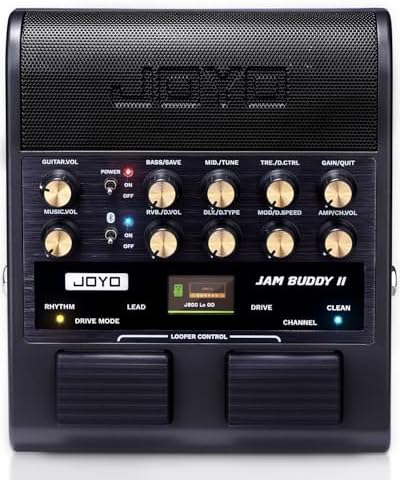
What Happens If You Go Under or Overbuy?
Too little wattage runs out of clean headroom fast. That is the point where the amp stops staying controlled at the volume you need, and the 38 listings screened here mostly state 10 W to 100 W, with a median of 30 W.
Do you need rehearsal volume, or only home practice? If rehearsal matters, 50 W or more is the safer threshold; if it does not, 10 W to 25 W avoids paying for output you will not use.
To keep things quiet, find the best guitar amp for apartment living.
Overbuying costs money and space. A 100 W amp is not a better answer for bedroom practice just because it is larger on the spec line, and the extra output is wasted when your use case stays at home.
Bassists should look at our guide to the best guitar amp for bass guitar.
That waste is practical, not abstract. Bigger wattage can mean more size, more weight, and more volume than your room can use, while the same 10 W to 25 W range already covers quiet practice, desk use, and direct recording.
The Wattage Mistake Most Buyers Make
The most common wattage mistake is chasing a bigger number instead of matching the use case. Wattage tells you output headroom, not sound quality, and it does not decide whether the amp suits your room.
Make sure to review the official certifications and safety standards for guitar amps.
Guitar amp wattage should match the job first
What should you optimise instead? Start with the job: home practice, rehearsal, recording, or modeler playback. Then match wattage to that job, and only after that look at speaker size, input count, and USB audio interface support.
Newcomers should look at the different types of guitar amps explained.
That order matters because a 25 W amp can still miss your real need if it lacks the right connection or speaker setup. A 50 W amp can also be the wrong buy if you only need a bedroom unit with headphone practice.
How Wattage Interacts with Other Guitar Amp Specs
Wattage works with speaker size, input count, and USB audio interface support, not alone. A higher wattage figure is wasted when the other deciding spec is the real limit.
Learn the basics by viewing how a guitar amp works and what it is.
Speaker size can limit how full the amp feels
Speaker size is the cone diameter inside the cabinet, and it shapes how much low end the amp can move. The category reference point is 8-inch to 12-inch speaker size, because that range changes how full the amp feels.
If you want a different setup, explore the guitar amp alternatives and other results.
If you want a fuller home sound, speaker size matters alongside wattage. A 10 W amp with a larger speaker can serve a different role than a louder small-speaker unit, because wattage alone does not decide tone shape.
USB audio interface support matters for direct recording
USB audio interface support is the feature that lets the amp send audio to a computer. If your goal is straight-to-computer recording, wattage is secondary to whether the amp states USB audio interface support at all.
You can find our full spec breakdown of the Champion II 50.
That is why 10 W to 25 W is often enough for recording at home. The recording path, not raw output, is the deciding spec in that workflow.
See how the JOYO 10W Amp performs in our analysis.
Input count matters when you need more than one source
Input count is the number of separate jacks or channels available. If you need a guitar input and another source at the same time, wattage does not solve that problem.
Input count also matters for acoustic guitar with a piezo pickup, because the connection setup has to fit the instrument you are using. A higher wattage figure cannot replace the wrong input arrangement.
Check out our full spec review of the Micro Terror.
Wrong speaker type can waste higher wattage
Modelers need the right speaker type as much as they need output. A normal guitar speaker colors the sound when you needed full-range playback, so 50 W or more only helps if the speaker format matches the job.
View how the Acoustasonic 2313700000 performs in our full analysis.
That is the failure mode to watch for. Power without the right speaker type does not give accurate amp tones, and the extra wattage can go unused.
Top Discounts is reader-supported: some links on this page are affiliate links, and as an Amazon Associate Top Discounts earns from qualifying purchases at no extra cost to you. Learn more.