Our Top 3 Picks for Jazz
The best 4-string bass guitar for jazz is the Fender Squier Classic Vibe 70s Jazz Bass, and its 52 in total length suits players who want a full-size stage instrument.
The picks are right below, in order. Everything after them is the reasoning, if you want it.

#1 – Fender Squier Classic Vibe 70s Jazz Bass
Best for: you want a 70s-style jazz bass guitar with a maple fretboard and a fixed bridge.
Why the Fender Squier Classic Vibe 70s Jazz Bass is our #1 pick
- Listed at $529.99 in November 2026 – premium among those compared; the price moves, so check it
- 4.4 rating from 349 ratings
total length: 52 in
For comparison on total length, pick #2 states 49.5 x 15.1 x 4.7 inches.

#2 – Fender Player Jazz Bass
Best for: you want a jazz electric bass with two volume controls, a master tone control, and a modern C-shaped neck profile.
Why the Fender Player Jazz Bass is our #2 pick
- Listed at $788.19 in November 2026 – premium among those compared; the price moves, so check it
- 4.5 rating from 198 ratings
total length: 49.5 x 15.1 x 4.7 inches
Against the other picks on total length, pick #1 states 52 in.
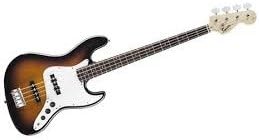
#3 – 8.8 pounds Squier Affinity Jazz Bass 0310760532
Best for: you want a lower-priced four string jazz bass with a 34-inch scale and two single-coil pickups.
Why the 8.8 pounds Squier Affinity Jazz Bass 0310760532 is our #3 pick
- Listed at $169.99 in November 2026 – entry among those compared; the price moves, so check it
- 4.7 rating from 1,232 ratings
scale length: 34
To put that total length in context, pick #1 states 52 in and pick #2 states 49.5 x 15.1 x 4.7 inches.
If you are on a budget, see our GSR200BWNF spec breakdown to learn more.
How Top Discounts picked: we started from the 200 most-reviewed 4-string bass guitar listings in our retail dataset, removed duplicates, accessories and off-category products, and 68 qualified. The picks on this page were selected from those 68 candidates against this topic’s requirements. The order of the picks reflects fit to this topic; each shows its rating and the number of ratings behind it, so you can weigh how much to trust it. Specifications come from manufacturer listings and ratings from verified Amazon buyer reviews (data checked November 2026).
Our Pick and How the List Was Built
A player who needs a four-string jazz bass for club dates often cares more about neck feel and layout than about chasing the lowest sticker price. Fender Squier Classic Vibe 70s Jazz Bass fits that situation with its 52 in total length, while the Fender Player Jazz Bass is the better call if you want the 9.5″ fingerboard radius and the Squier Affinity Jazz Bass 0310760532 is the value route at $169.99.
The Classic Vibe 70s Jazz Bass is the steadier choice for players who want the traditional Jazz Bass family look in a full-size format. The Player model adds two player Series single-coil jazz bass pickups, so it suits buyers who want a more explicit pickup spec, while the Affinity model keeps two single-coil pickups and a fixed bridge at a lower price.
We screened 68 4-string Bass Guitars at Top Discounts and kept 10 for this page because we were looking for jazz bass options that fit walking lines, gig use, and budget limits at the same time. The shortlist runs from $169.99 to $788.19, and the median price of the 10 products in our comparison is $219.99.
Four-string Bass Guitars for Jazz in Brief, Before You Read the Rest
- Top pick: Fender Squier Classic Vibe 70s Jazz Bass at $529.99 (total length: 52 in).
- Also picked: Fender Player Jazz Bass at $788.19; 8.8 pounds Squier Affinity Jazz Bass 0310760532 at $169.99.
- We compared 10 4-string Bass Guitars, from $169.99 to $839.99, median $219.99.
- Best buyer rating in the comparison: 8.8 pounds Squier Affinity Jazz Bass 0310760532 at 4.7/5 from 1,232 ratings.
- Not covered by these picks: keep the left hand from stretching too far at the nut – needs 1.5″ nut width, and none of the picks reaches it.
Four-string Bass Guitars for Jazz: Price, Rating and Specs Compared
| Product | Price | Rating | Pickup configuration |
|---|---|---|---|
| Fender Squier Classic Vibe 70s Jazz Bass | $529.99 | 4.4 (349 ratings) | Not stated |
| Fender Player Jazz Bass | $788.19 | 4.5 (198 ratings) | single-coil |
| 8.8 pounds Squier Affinity Jazz Bass 0310760532 | $169.99 | 4.7 (1,232 ratings) | two single-coil pickups |
| Ibanez GSR200BWNF GIO | $219.99 | 4.6 (1,984 ratings) | combination |
| Ibanez GSR200PW | $219.99 | 4.6 (1,982 ratings) | combination |
| Yamaha TRBX504 TBN | $219.99 | 4.6 (1,869 ratings) | Not stated |
| Yamaha TRBX304 BL | $219.99 | 4.6 (1,869 ratings) | Not stated |
| Fender Player Precision Bass | $839.99 | 4.4 (231 ratings) | P |
| Fender Squier Affinity Precision Bass | $169.99 | 4.5 (230 ratings) | PJ |
| Fender Squier Debut Precision Bass | $219.99 | 4.5 (932 ratings) | P |
Prices are approximate and move frequently – check the current price before deciding. “Not stated” means the manufacturer listing does not give that figure – we do not estimate it.
Fender Player Jazz Bass fits this topic best because its two player Series single-coil jazz bass pickups suit jazz phrasing and comping control.
Each Pick for Jazz, Examined One by One
The 3 picks below are reviewed in the same order as the cards above.
Fender Squier Classic Vibe 70s Jazz Bass
This Squier Classic Vibe 70s Jazz Bass fits a jazz bass roundup because it leans into the 1970s Jazz Bass format and keeps the familiar maple fretboard. Its 52-inch total length also gives you a clear size reference, which matters if you are comparing full-length instruments for reach and storage.
What we like: The 52-inch overall length is the main concrete size figure here, and it helps frame this as a full-size four-string bass rather than a compact short-scale option. The maple fretboard and Fender-designed alnico pickups point this model toward the classic Jazz Bass lane, while the hard tail bridge keeps the hardware straightforward. Its 4.4 rating across 349 ratings adds useful context, and the price sits around $529.99.
Keep in mind: The 52-inch total length can matter if you need a smaller instrument for tighter storage or easier transport. The fret size is not stated, so you do not get that detail for feel or articulation comparisons.
Fender Player Jazz Bass
The Player Jazz Bass belongs here because it keeps the familiar Jazz Bass layout and adds a modern C-shaped neck profile. Its 9.5-inch fingerboard radius is the kind of number that matters when you care about left-hand comfort and string access on a jazz electric bass.
What we like: Two player Series single-coil jazz bass pickups give this model the classic two-pickup Jazz Bass formula, with separate volume controls and a master tone control for shaping the blend. The maple fingerboard, alder body, and fixed bridge keep the spec set aligned with a standard electric bass for jazz gigs. The 4.5 rating from 198 ratings sits alongside a price around $788.19.
Keep in mind: The dimensions are listed as 49.5 x 15.1 x 4.7 inches, but the deciding scale length is not stated. Fret size is also not stated, so players who choose by fret feel will not get that comparison point here.
8.8 pounds Squier Affinity Jazz Bass 0310760532
The Squier Affinity Jazz Bass is the budget entry in this jazz bass guitar group, and its 34-inch scale length gives you the standard long-scale feel many players expect. The rosewood fretboard and two single-coil pickups keep it close to the familiar four string jazz bass formula.
What we like: The 34-inch scale length is the key number here, because it sets the speaking length of the strings and shapes the feel you get under the left hand. Two single-coil pickups, separate neck and bridge volume controls, and a master tone control give this bass the usual Jazz Bass control layout. At around $169.99, it is the lowest-priced pick here, and its 4.7 rating from 1,232 ratings gives that entry price useful context.
Keep in mind: The rosewood fretboard changes the material choice, but fret size is not stated, so you cannot use the listing to judge note articulation from that detail. The 34-inch scale also means it is not the short-scale route if you want a smaller reach.
Review the essential technical requirements to ensure the bass meets your needs.
View our top picks for a quick summary of the best options.
Compare the features side by side in the comparison table.
How to Choose a 4-string Bass Guitar for Jazz
Neck Pickup Warmth For Walking Lines
Prioritize neck pickup warmth for walking lines if you want the fuller end of the jazz-bass sound. The Fender Player Jazz Bass gives you two Player Series single-coil jazz bass pickups, so its neck pickup can carry the line while keeping the bridge unit available for blend control. The Squier Affinity Jazz Bass states two single-coil pickups and separate neck and bridge volume controls, which gives you direct control over how much neck pickup you feed into the mix. The Classic Vibe 70s Jazz Bass does not state its pickup layout, so its neck-pickup role is less explicit in the data. Fender Jazz Bass models are the clearest benchmark here, and these two Fender-branded picks stay closest to that split-pickup format.
Bridge Pickup Bite For Comping Accents
Use bridge pickup bite for comping accents when you want sharper note edges and more cut in a jazz ensemble. The Fender Player Jazz Bass states a single-coil pickup setup, which usually gives you the bridge-side articulation players reach for in jazz comping. The Squier Affinity Jazz Bass lists two single-coil pickups, so its bridge pickup can be brought forward with the bridge volume control. The Classic Vibe 70s Jazz Bass uses Fender-Designed alnico pickups, but the listing does not break out the bridge pickup separately. For this criterion, the bridge pickup separates the field more than body style or finish.
String Spacing For Right-Hand Articulation
Watch string spacing for right-hand articulation if your plucking hand needs clear separation between strings. None of these three listings states bridge string spacing, so the decision has to rest on pickup layout and neck feel instead. The Jazz Bass format is the Fender Jazz Bass benchmark for slimmer neck feel and bridge pickup articulation, and the Player Jazz Bass follows that format with a Modern C-Shaped neck profile. The Squier Affinity Jazz Bass gives you a 34 scale length and a rosewood fingerboard, while the Classic Vibe 70s Jazz Bass uses a maple fretboard. Because spacing is not stated, you should not buy on assumption here.
Fretboard Feel For Fast Jazz Runs
Choose fretboard feel for fast jazz runs by weighing neck profile and fretboard material together. The Fender Player Jazz Bass states a Modern C-Shaped neck profile and a 9.5″ fingerboard radius, which points to a familiar, compact left-hand shape for quick position shifts. The Classic Vibe 70s Jazz Bass uses a maple fretboard, and the Player Jazz Bass also uses maple, so the main contrast there is the neck shape rather than the board wood. The Squier Affinity Jazz Bass uses rosewood on the fretboard, which gives you a different surface material from the two Fender models. If fast runs matter more than vintage styling, neck profile is the more useful filter than color or hardware.
Low-End Response That Stays Clear Under Chords
Favor low-end response that stays clear under chords when you want the line to hold together in denser harmony. The Squier Affinity Jazz Bass is the only one here with a stated 34 scale length, and that long-scale format is the standard reference point for tension and string feel. Its two single-coil pickups and fixed bridge give you a straightforward layout for shaping bass lines without extra electronics. The Fender Player Jazz Bass adds two volume controls and a master tone control, so you get more blend control when chords thicken the texture. For jazz, passive pickup layouts are the safer default when you want the bass to sit naturally in the mix.
See which model fits your specific playing style in our audience checklist.
Check out the FAQ to get quick answers to common questions.
Find out about warranty and maintenance in the setup and warranty notes.
Beginners can learn 4-string bass guitar terms to understand the technical specifications better.
What Each Job Calls For vs What These Picks State
Match the job you actually need done to the figure it calls for, then check which picks state that figure or more. Where none do, the row says so.
| What you want to do | The figure it calls for | Picks at or above it |
|---|---|---|
| get a jazz bass for walking lines with standard string tension | 34″ scale length | Affinity Jazz Bass clears it; the other two picks do not state scale length |
| keep the bass easy to reach with a familiar full-size feel | 34″ scale length | Affinity Jazz Bass clears it; the other two picks do not state scale length |
| keep the left hand from stretching too far at the nut | 1.5″ nut width | none of the three picks state that figure; a bass that states 1.5″ or narrower would suit this job |
These figures are the levels this category is generally held to, not manufacturer claims. A pick at or above a figure states that number; how it reaches it and the rest of your setup still decide the job, so check them against your own workload before buying.
Who Buys Four-string Bass Guitars, and What It Really Costs
Who buys a 4-string bass, and what each one needs
- Jazz combo players — need 4-string E-A-D-G tuning and a 34″ long scale vs 30″ short scale choice that matches reach and string feel
- Left-handed students — need the correct handedness and a neck profile that does not make the bass awkward to hold or fret
- Small apartment players — need a 4-string bass with a body size and total length that fits tight practice spaces and storage
- School jazz band members — need passive pickups or active electronics that suit the group’s output level and tone control needs
- Working cover-band bassists — need PJ pickup layout or P or J single-pickup layouts so one bass can cover punch and articulation
- Adult beginners with smaller hands — need a 1.5″ nut width for easier left-hand comfort and faster fretting
What a 4-string bass guitar really costs, and where to buy one
What to budget for on top of the 4-string bass guitar
- Instrument cable — needed to connect the bass to an amp or interface
- Bass amplifier — needed to hear the instrument at usable volume
- Tuner — needed to set 4-string E-A-D-G tuning accurately
- Gig bag — needed to carry and protect the bass between home, rehearsal, and lessons
- Extra strings — needed because string wear and breakage make replacements part of use
What you can leave out of the budget
- Pickups upgrade — unnecessary if the bass already has the pickup layout and output the player wants
- Battery charger — unnecessary for passive pickups because they do not use a battery
- Large pedalboard — unnecessary for players who want a direct jazz tone from the bass and amp
- Hard case — unnecessary for home use when a gig bag already covers basic transport
Where this kind of product is normally sold
- Big-box music retailers — usually offer return windows, basic setup help, and predictable pricing
- Independent guitar shops — often provide hands-on comparison, setup support, and easier warranty handling
- Online instrument stores — usually give wider selection, bundle options, and price competition
- Used gear marketplaces — can lower entry cost, but return terms and condition checks vary by seller
- General e-commerce marketplaces — convenient for shipping and reviews, with warranty handling depending on the seller
Follow the buying guide to understand the key criteria for choosing a jazz bass.
Review the scope of this roundup to see exactly what is covered.
Explore the detailed reviews for an in-depth look at every instrument.
Left-handed players can explore our full GSRM20BKL review for more details.
Getting Started with Any of These Picks
What these four-string basses need before they work
All three need bass strings before they produce sound, and the scale length matters because it sets string speaking length.
- Fender Squier Classic Vibe 70s Jazz Bass uses a 52-inch overall length, so measure case space before you order a gig bag.
- Fender Player Jazz Bass states a 49.5 x 15.1 x 4.7 inch size, so check your storage space if you already own a case or stand.
- 8.8 pounds Squier Affinity Jazz Bass 0310760532 uses a 34-inch scale, so roundwounds or flatwounds both fit the same 4-string format; the string choice changes tone, not scale.
- Fender Player Jazz Bass and Fender Squier Classic Vibe 70s Jazz Bass both state maple fretboards, while the Squier Affinity uses rosewood, so your setup action target may differ after stringing.
What to verify when your jazz bass arrives
Coverage differs by seller and country, so check the instrument itself first while the return window is still open.
- Confirm the neck is straight and the frets are clean on the Fender Squier Classic Vibe 70s Jazz Bass, because a 52-inch bass is awkward to rebox if you miss a problem.
- Check that the fixed bridge on the Fender Player Jazz Bass is intact and seated, because bridge hardware affects string height and intonation.
- Inspect the 34-inch Squier Affinity Jazz Bass 0310760532 for pickup height and setup action, because those settings control output balance, noise control, and low-fret buzz.
- Verify the tuners and hardware finish on each bass, because nickel-plated hardware and hard-tail bridges are the parts most likely to disappoint if they arrive bent or loose.
As soon as it arrives, string it, tune it to E-A-D-G, and play every fret on every string before the return window closes.
What Buyers Still Want to Know About 4-string Basses for Jazz
What neck width and string spacing feel best for jazz bass playing?
For jazz bass playing, a 1.5-inch nut width is the narrow benchmark that usually supports quicker fretting and easier left-hand reach. None of these three picks states nut width, so the comparison here turns on the neck shape and layout each listing does give: the Player Jazz Bass lists a Modern C-Shaped neck profile, the Classic Vibe 70s Jazz Bass uses a maple neck, and the Affinity Jazz Bass uses a 34-inch scale.
How much should I spend on a good 4-string bass for jazz?
A good 4-string bass for jazz depends on how much classic Jazz Bass alignment you want versus how low you need the entry price to go. The Squier Affinity Jazz Bass sits around $169.99, while the Classic Vibe 70s Jazz Bass is around $529.99 and the Player Jazz Bass is around $788.19.
The Affinity gives you the lowest-cost way into this group, but the Fender models ask more because they stay closer to the Jazz Bass name and styling buyers usually seek for this page.
Is a 34-inch scale length better for jazz, or should I look for something else?
A 34-inch scale length is the familiar full-scale choice for jazz if you want standard reach and tension. The Squier Affinity Jazz Bass states 34, while the other two picks here do not state scale length, so only the Affinity gives you a confirmed full-scale figure in this set.
That matters because scale length changes string feel and low-end response, not body size or fret count. If you want the most familiar baseline for jazz phrasing, start with the 34-inch figure and then weigh the rest of the neck and pickup data.
What else do I need to make a 4-string bass work well for jazz gigs or practice?
For jazz gigs or practice, you need the bass, an amp, and a setup that matches the pickup layout you choose. The Player Jazz Bass uses two player Series single-coil jazz bass pickups with two volume controls and a master tone control, while the Affinity Jazz Bass uses two single-coil pickups with separate neck and bridge volume controls plus a master tone control.
The Classic Vibe 70s Jazz Bass lists Fender-Designed alnico pickups and a fixed bridge, but it does not state the pickup count. If you want the simplest control layout for quick level balancing, the two-volume-plus-tone format on the Player and Affinity gives you that directly.
Which jazz bass guitar should I buy if price matters most?
If price matters most, the Squier Affinity Jazz Bass is the one to start with because it sits at around $169.99. The Classic Vibe 70s Jazz Bass and Player Jazz Bass cost much more, at around $529.99 and $788.19.
That lower price buys you a 34-inch scale and a fixed bridge, so you keep the familiar full-scale format without moving into the Fender price tier.
Who Should Skip These 4-string Bass Guitars
If your jazz work needs a 1.5″ nut width, these three 4-string bass guitars are the wrong tool. That nut width is the narrow benchmark for left-hand comfort and fast fretting, and none of the picks states it.
Choose a bass with the nut width you need, then compare scale length and handedness before you order. A wrong scale length can leave the neck feeling cramped or too stiff, like wearing shoes that are the right size but the wrong shape. If you are left-handed, use the left-handed bass guide instead: best left handed 4-string bass guitar.
Every 4-string bass guide in this category
- Choosing the Best 4 String Bass Guitar for Home Practice
- The 4 String Bass Guitars That Work Best for Rock Music
- The Bass Guitars That Fit a Left Handed Starter Instrument for a Child
- Starting Apartment Practice With a 4 String Bass Guitar
- Choosing the Best 4 String Bass Guitar for Beginners
- The 4 String Bass Guitars That Work Best for Small Hands Under $300
Top Discounts is reader-supported: some links on this page are affiliate links, and as an Amazon Associate Top Discounts earns from qualifying purchases at no extra cost to you. Learn more.