A 4-string bass guitar is a fretted string instrument that supplies low notes for a song, usually in 4-string E-A-D-G tuning. If you need standard bass range without extra strings, the 34″ long scale vs 30″ short scale choice is the first fit decision. Check your reach and hand comfort first, then decide whether you want the default long scale or the shorter option.
How a 4-string bass anchors the rhythm section
Its job is to anchor the rhythm section. The bass line often carries the link between drums and harmony, so the string length, pickup type, and neck shape matter more than decorative features. A short-scale instrument can feel easier to reach, while a long-scale instrument keeps the more familiar spacing many players expect.
How a 4-string bass guitar works
A 4-string bass guitar works by turning string vibration into amplified low-frequency sound. The string is plucked, the vibration travels through the neck and bridge, the pickups convert that motion to signal, and the amp makes it audible.
Understanding how the neck width feels is easy with our guide on how to choose your nut width.
- Next, the bridge sets string spacing and intonation, so each string starts and ends in the right place for accurate notes.
- Then the fretboard defines note positions and playing feel, giving you fixed spots for each pitch.
- After that, the neck determines reach and hand comfort, which affects how far your left hand travels.
- Finally, the pickups send the string vibration to the output, and passive pickups vs active electronics changes output level, EQ control, and battery dependence.
Why passive pickups make a 4-string bass simpler
That last choice matters when you want simple operation. Passive pickups usually mean fewer controls and no battery, while active electronics add onboard shaping and need power. If you want a direct path into an amp, passive wiring keeps the signal chain simpler.
4-string Bass Guitars we have reviewed in detail
Prices across these 3 run from $219.99 to $219.99; each one has a full review here.

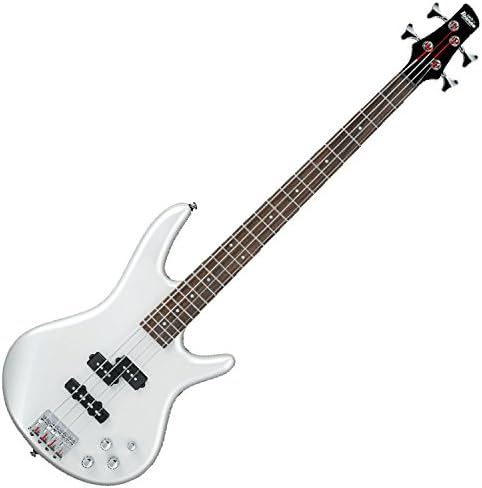

Parts that change the result
Intonation is the note accuracy up the neck, and a fixed bridge sets that relationship without moving parts during play. The tuning machine matters when you need stable tuning changes between songs or sessions.
Learn how many strings you actually need by reading our guide on how to choose your string count.
How the fretboard and neck shape affect a 4-string bass
The fretboard is the surface with the frets, and it defines where each note sits. A narrower layout can make fast fretting easier for some hands, while a wider layout can leave more room between strings. The neck is the long section you grip, and its profile changes how much your hand has to stretch.
Why 4-string E-A-D-G tuning is the default format
4-string E-A-D-G tuning is the default format buyers compare against. It gives you the standard low-to-high string order, so most beginner material, tabs, and setup advice assume it. If you already know that tuning, you can compare the instrument by feel instead of by relearning the layout.
Finding the right feel depends on knowing how to choose your total length for a comfortable reach.
What a 4-string bass changes in practice
A 4-string bass changes how much low end you can cover with less left-hand reach than a wider instrument. That matters in rock, pop, country, funk, and many worship setups where the bass part sits under the song, not above it.
When a 4-string bass feels limiting or enough
It does not change every musical job. If you need extended range for solo bass lines, chord work, or very low notes, four strings can feel limiting. If you mainly support roots, fifths, and simple walking lines, the format usually gives you enough range without extra complexity.
How scale length changes a 4-string bass feel
Scale length changes the feel more than the number of strings does. A 34″ long scale gives the standard speaking length most players expect, while a 30″ short scale shortens the reach and changes tension. If your hands tire on longer stretches, the shorter format can matter more than pickup count.
Check out our full GSRM20SLB review to see how this specific blue model performs.
Questions buyers ask about 4-string bass guitars
What do you give up at this price compared with a more expensive bass?
You usually give up refinement in hardware, electronics, and finish, not the basic job of making bass notes. Lower-cost instruments often keep the core format but simplify the bridge, pickups, or control layout. If you need a working bass part, the missing extras matter less than correct scale length and comfortable neck feel.
Can I plug it straight into a normal bass amp and get usable sound right away?
Yes, a 4-string bass guitar can plug straight into a normal bass amp and produce usable sound right away. The standard output path is the instrument cable into the amp, with no special converter required. If the bass uses passive pickups, you also avoid battery checks before playing.
You can see the detailed specifications in our full GSRM20MPL review to see if it fits your needs.
How versatile is the split-coil plus single-coil pickup setup for different styles?
A split-coil plus single-coil pickup setup is versatile because it combines a fuller lower-mid voice with a more pointed bridge-side sound. That gives you two broad tonal zones from one instrument, which helps when you move between supportive low end and more defined parts. If you want one bass for several styles, that layout is a practical middle ground.
Is the fixed bridge going to stay in tune well enough for everyday use?
Yes, a fixed bridge is usually enough for everyday use when the tuning machine and string installation are correct. The bridge itself does not hold pitch; it sets spacing and intonation while the tuners keep the strings at pitch. If your playing uses normal tuning changes rather than aggressive vibrato, a fixed bridge is the simpler choice.
Can I use standard bass strings and setup parts on it, or do I need special short-scale stuff?
You can use standard bass strings and setup parts only when the scale length matches the string set and hardware dimensions. A 34″ long scale usually takes standard long-scale strings, while a 30″ short scale needs short-scale strings made for that span. Setup parts such as bridges and tuners also need the right fit for the neck and body dimensions.
View our analysis of the Affinity Jazz Bass spec breakdown to see how it handles its weight.
Who needs a 4-string bass guitar
You need a 4-string bass guitar if you want standard bass tuning, ordinary amp compatibility, and a simpler left-hand layout. That is the right condition when your parts stay in the lower register and you do not need extra strings for extended range.
When a 4-string bass is not the right choice
You do not need one if your playing depends on five-string low notes, wide chord voicings, or a very specific neck width that this format does not provide. You also do not need it if your hands already prefer a different scale length and you know that 34″ or 30″ changes your comfort. The right choice is the one that matches reach, tuning, and the amount of range you actually use.
The other four string bass guides we have published
Top Discounts is reader-supported: some links on this page are affiliate links, and as an Amazon Associate Top Discounts earns from qualifying purchases at no extra cost to you. Learn more.